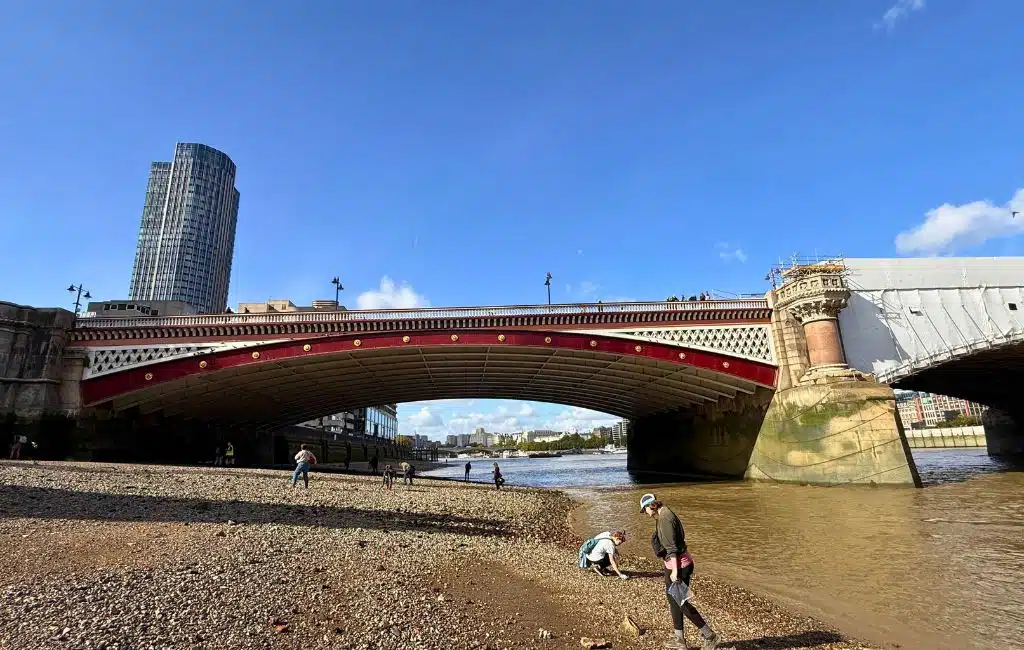
It was a bright autumn morning when I met my guide, Sean Clark, at Rennie Garden, at the southern end of Blackfriars Bridge, ready to go mudlarking in London for the first time. Sean leads tours for the Thames Explorer Trust and is a seasoned mudlarker, someone who spends their time combing the river’s muddy foreshore for fragments of the city’s past.
If you’ve ever stood on one of London’s many bridges and looked down at the River Thames, you may have noticed that the height of the city’s great river changes dramatically over the course of the day – it can change by 7 to 7.5 meters between low tide and high tide.
When the tide is out, you’ll often spot people down on the Thames foreshore, moving slowly, bent over in concentration, pausing occasionally to inspect something among the stones and pebbles by their feet. Like Sean, they are mudlarks.
Not only do they play an important role in helping to preserve the history of the Thames, they are part of an ever-growing number of people fascinated with discovering the city’s past.
Disclosure: This post may contain affiliate links. I have been or could be if you click on a link in this post compensated via a cash payment, gift or something else of value for writing this post. See our full disclosure policy for more details.
What is mudlarking?
Today, mudlarking in London is a hobby where, each time the tide goes out, people comb the foreshore in search of objects lost or thrown away over the centuries.
But it wasn’t always a recreational pastime. In Georgian and Victorian London, it was the poorest of society – typical women and young children – who were the original mudlarks. Early mornings saw them on the river banks scavenging for items to sell from pieces of coal or wood to metal or even animal bones. If they were lucky, they may even find a coin that had been carelessly dropped into the water.
That’s the incredible thing about the Thames, it has been the lifeblood of London for nearly 2,000 years. The Romans founded Londinium on its banks, and after them came the Saxons, Vikings, medieval merchants, Tudor courtiers, Georgian traders, and Victorians. And all of them have left their mark not only on the city, but in the river too.
Do you need a permit to go mudlarking?
Mudlarking in London in modern times requires a permit from the Port of London Authority (PLA). Permits can be obtained from the Port of London Authority website but be aware that there are only 4,000 standard permits issued annually (and 50 creative permits for using finds in artwork), and that when the waiting list was last open, there were more than 10,000 people registered.
It’s become such a popular hobby that, for the time being, the PLA have paused new applications.
If you do get the chance to register (or had registered previously and were one of the lucky ones to receive a standard permit) then the way that it works is this:
- A Thames foreshore permit is required for any searching, scraping, metal detecting or beach coming. You are allowed to walk along the foreshore without a permit but you can’t search or pick anything up (and you certainly can’t bring metal detectors with you). And if you happen to spot something that you like the look of, know that it is illegal to take anything away with you unless you have a permit.
- Permits cost £42 for the year and do not renew automatically.
- Permits only cover certain stretches between Richmond Lock and the Thames Barrier, and some areas such as scheduled monuments, need separate permission.
What this all means in practice is that it’s pretty tricky to get a permit and go mudlarking on your own so the best way to try this very London activity is on a mudlarking tour.
A London Mudlarking Tour
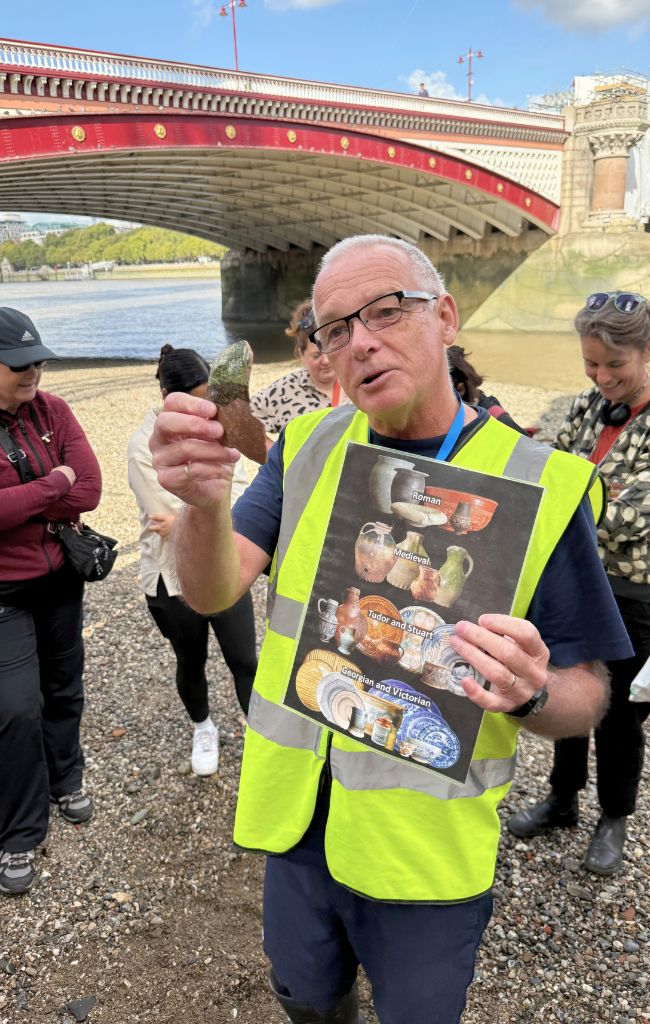
The Thames Explorer Trust is the main charitable organisation running public and private mudlarking tours in partnership with the London Museum (formerly Museum of London) and this is who I booked with. Sean is a licensed Thames mudlark and he regularly leads groups on tours of the banks of the Thames.
After our group had gathered, Sean led us down the steps from Rennie Garden to the river foreshore where he introduced himself and explained where we were standing.
This stretch of Bankside was once London’s playground, he explained, a place where bear-baiting amphitheatres, gambling houses and brothels stood side by side. It’s also the former location of Winchester Palace and where the Globe Theatre once stood (today’s location of Shakespeare’s Globe is about 230 metres west of its original address).
The river itself was as lively as its surrounds thanks to the medieval London Bridge, then the only bridge spanning the Thames. With 20 arches, it created treacherous rapids and passengers often hired “bridge shooters” to navigate them, experienced oarsmen who could navigate the rapids and travel safely through the arches.
The journeys weren’t smooth, however, and countless items were dropped in the river – providing treasure for modern day mudlarkers.
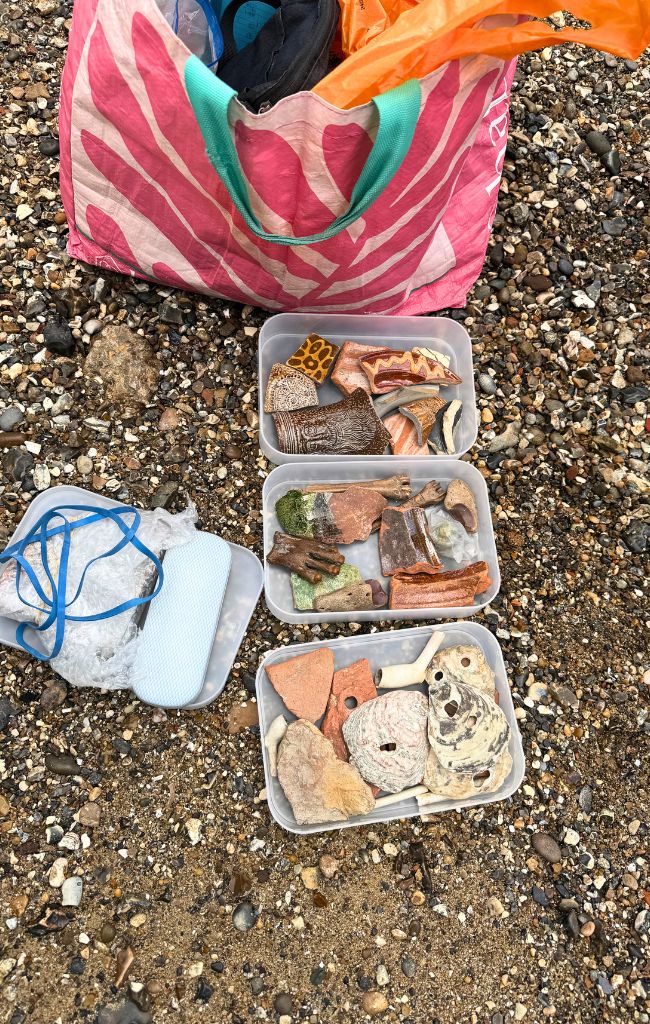
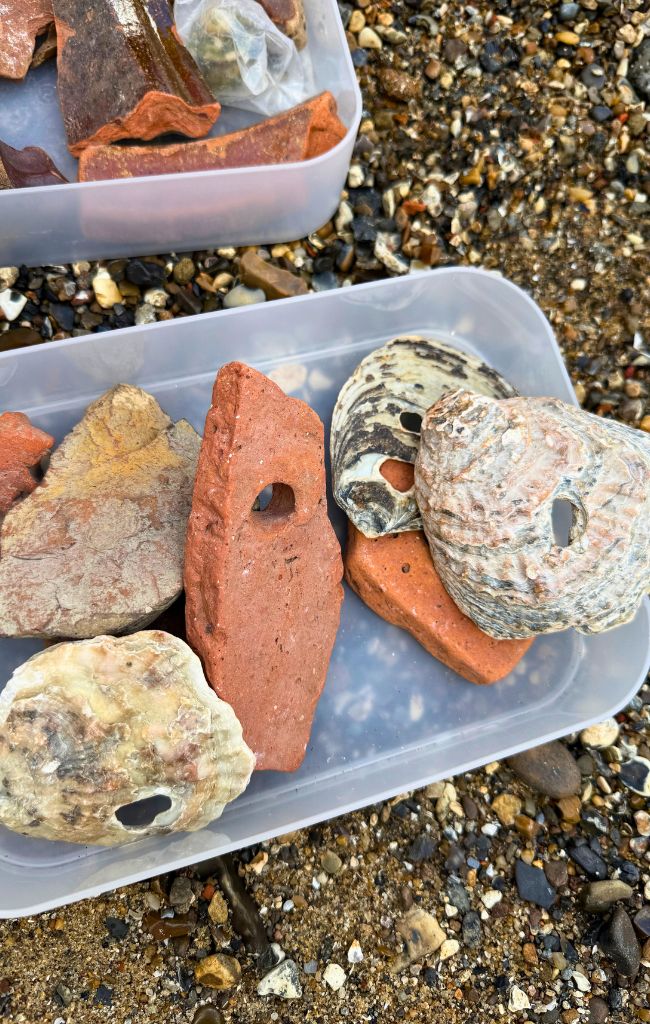
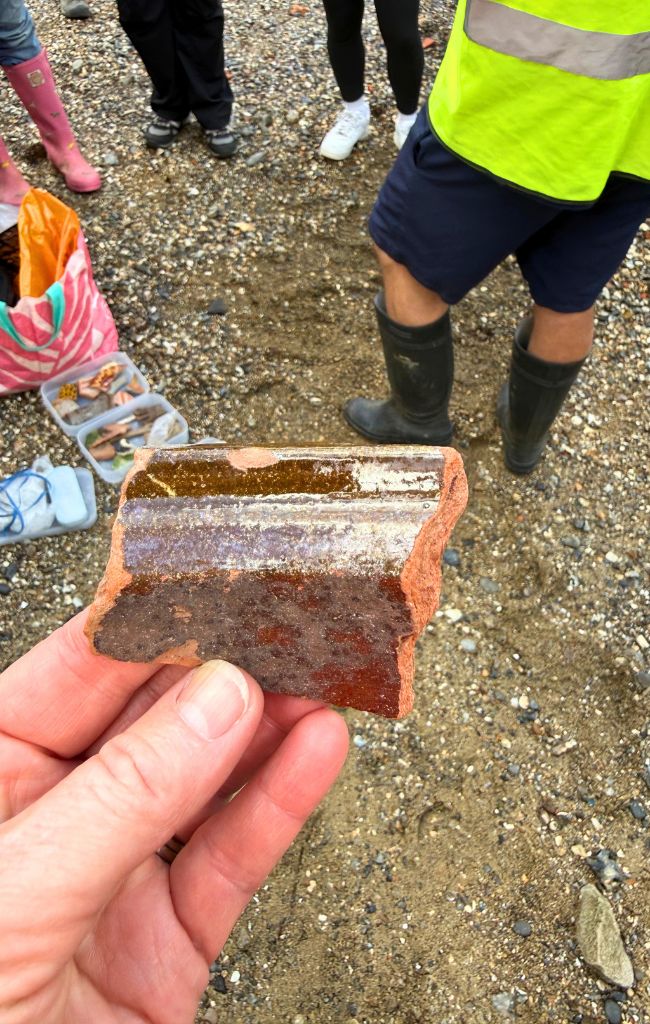
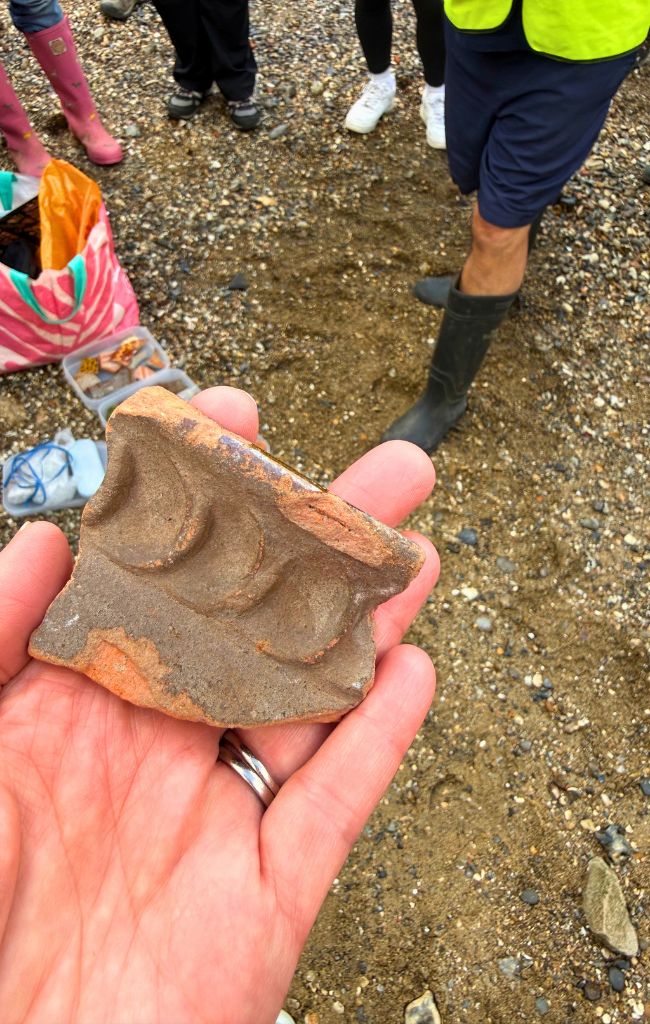
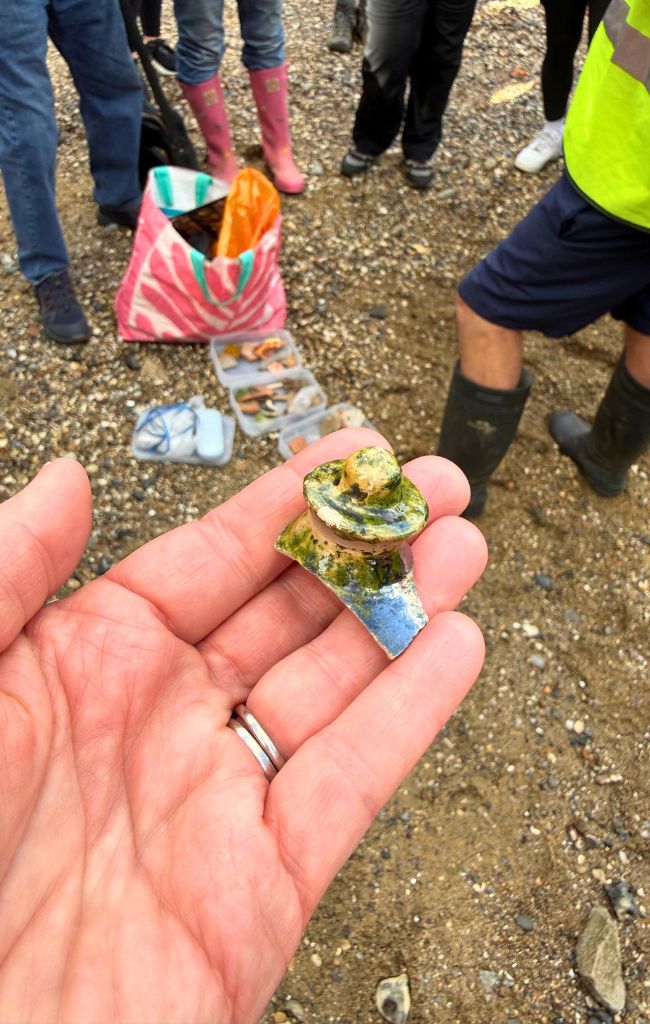
Taking out a series of plastic boxes, Sean showed us some of the historical objects that you might find mudlarking in London. These included:
- Oyster Shells: Once the “food of the poor,” it’s thought that these were once possibly used as tokens for crossing the river.
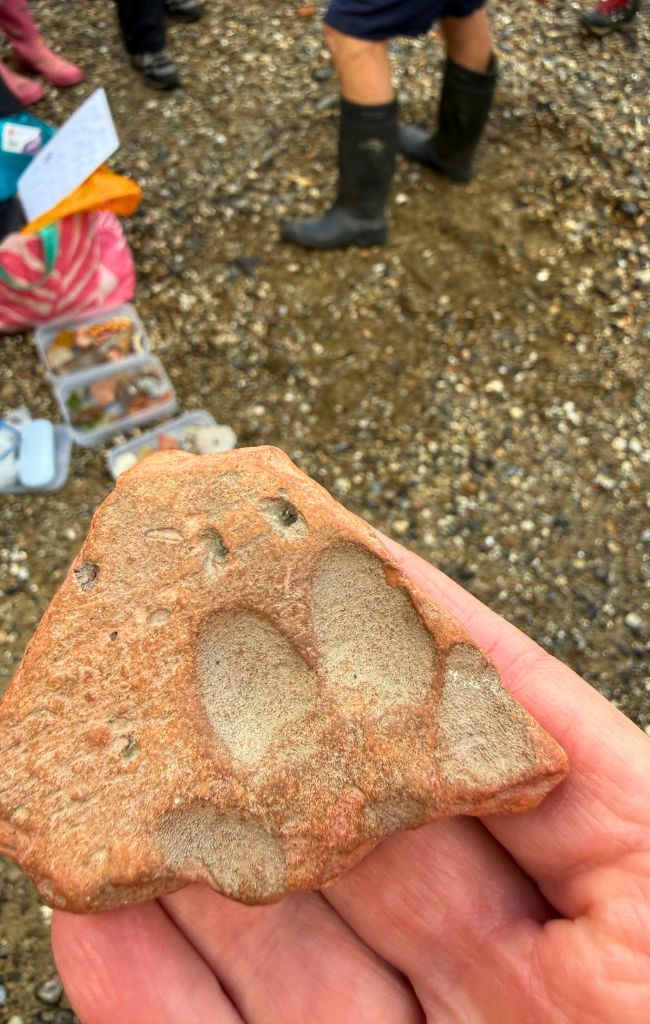
- Roof Tiles: Sean showed us a couple of medieval tiles with animal paw prints on them from when they were left to dry in yards.
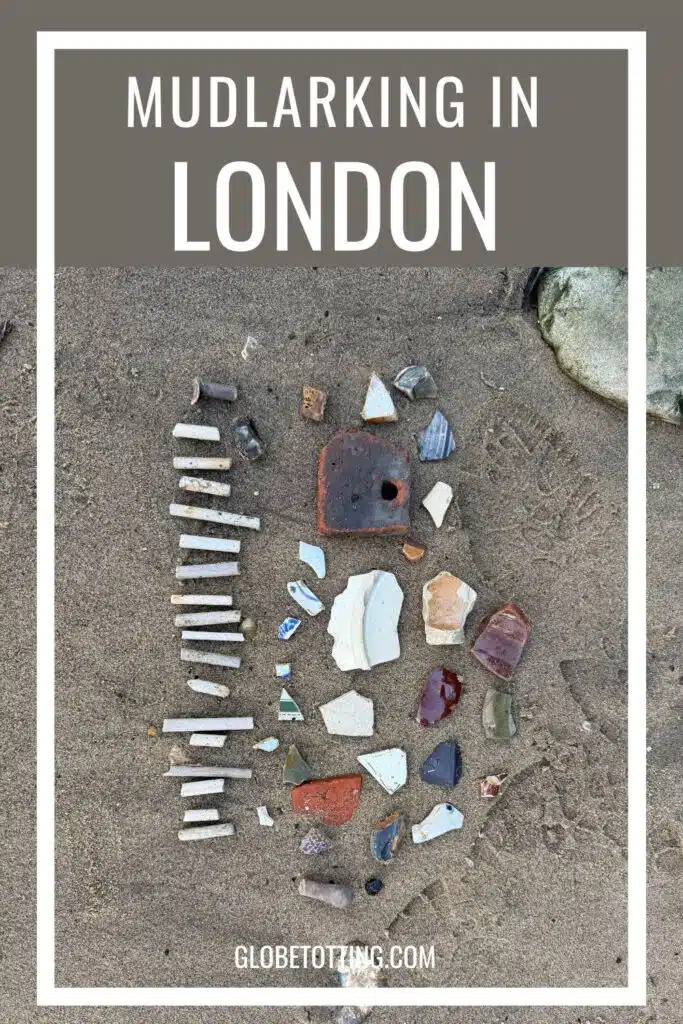
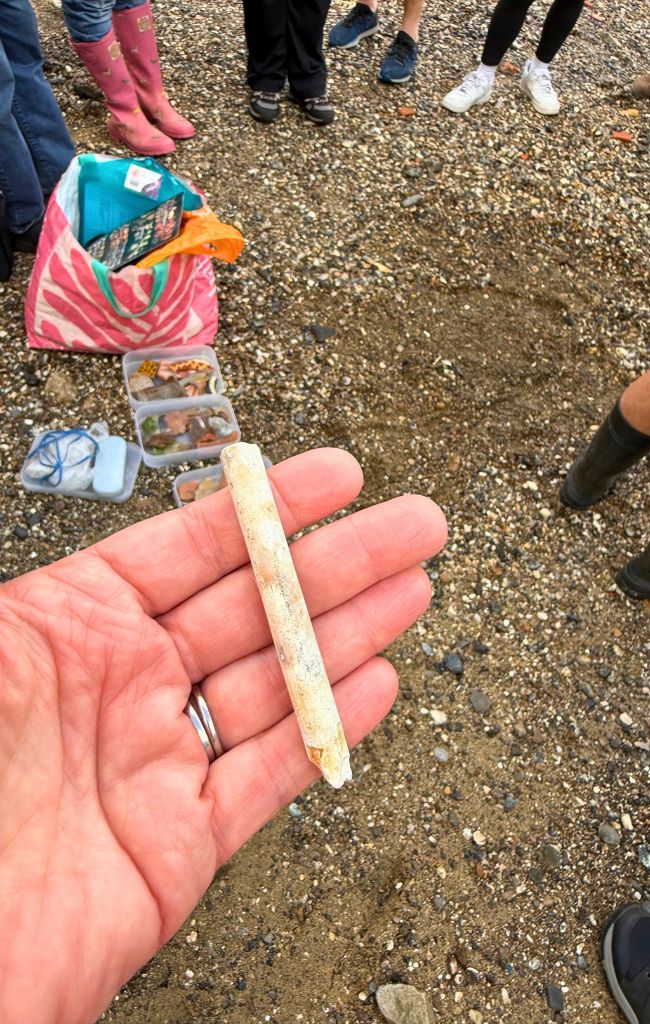
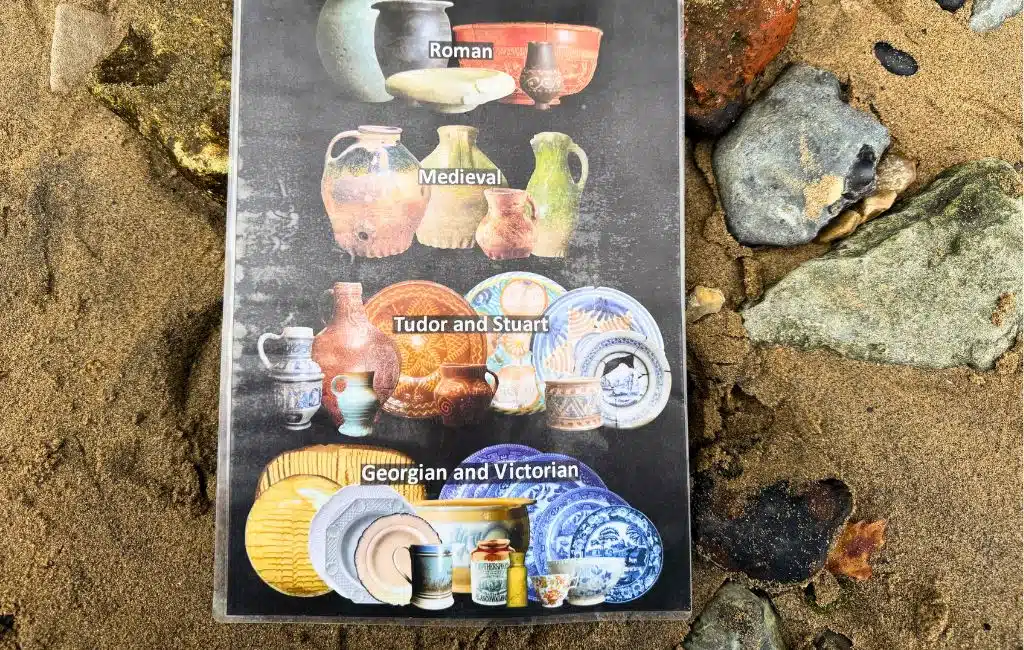
- Clay Pipes: You’ll find clay pipe stems everywhere, but finding a bowl is the prize. Whipping out a laminated illustration, Sean explained how the size of the bowl helps date it, the smaller bowls (1610–1640) reflect when tobacco was a luxury.
- Bone Tools: Butchered animal bones are also common and some were repurposed into tools like a “FID”, which was used for coring apples or mending nets.
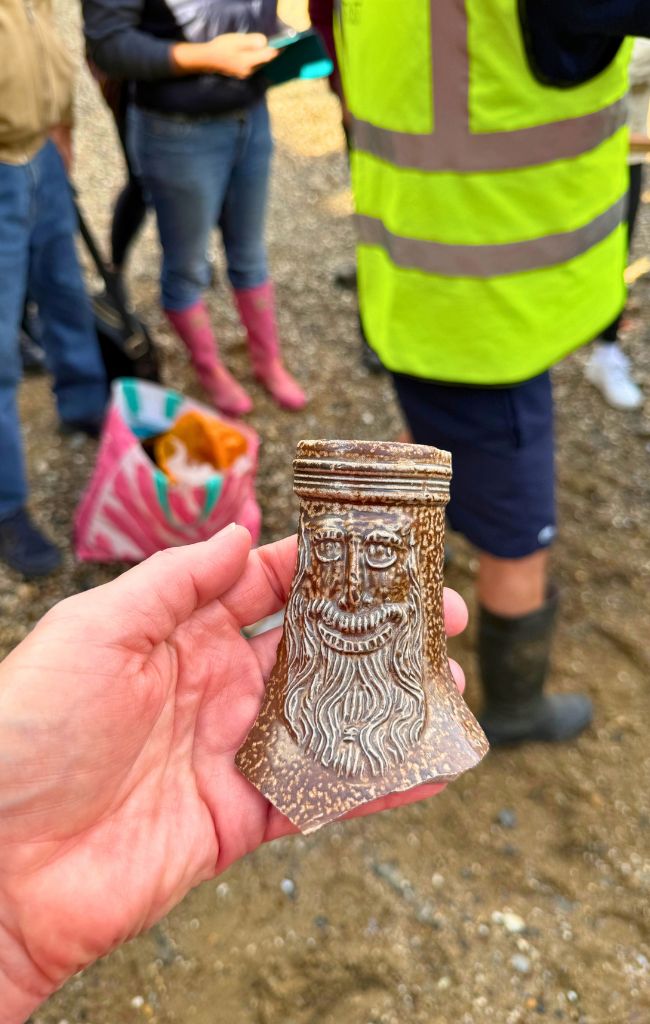
- Ceramics: Sean explained how Tudor pottery is typically green, while later periods introduced colour. Salt-glazed stoneware from Germany (1600s) is identifiable by its mottled pattern.
It was Sean’s own finds, however, that were the most exciting. He has been mudlarking for the last eight or so years and has come across some incredible archaeological finds in that time including 44 dice, from Roman times and medieval times. As gambling was illegal, the die were tiny and often made of antler.
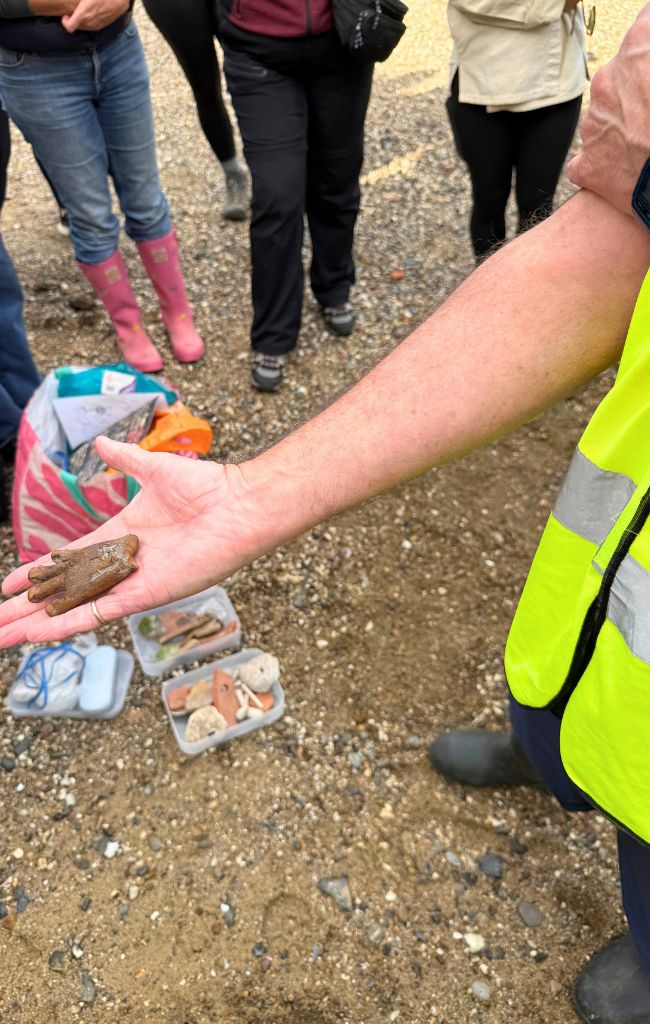
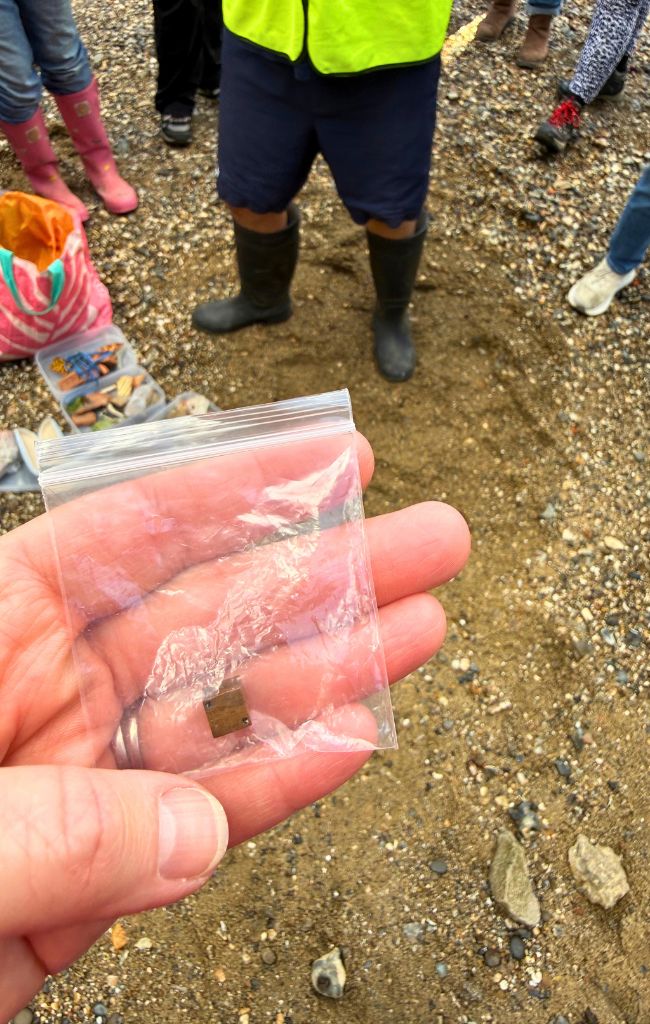
He also found a medieval floor tile featuring three lions – like the England emblem – dating to around 1300 and a fused dog paw bone found near the Globe Theatre that he has nicknamed Yorick.
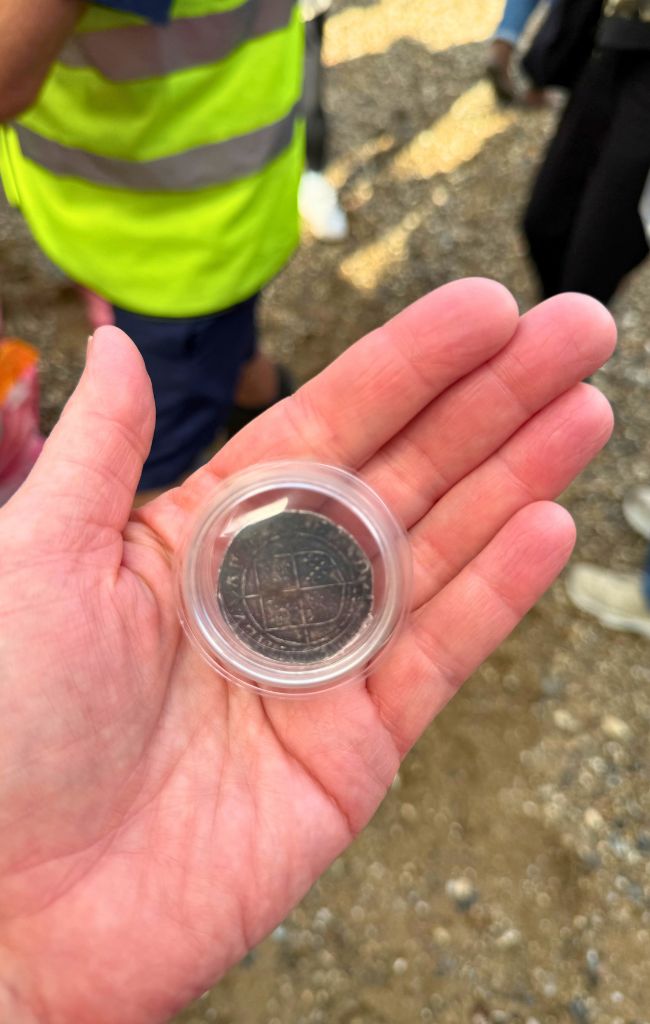
Most impressive is the silver hammered coin from 1582 that he found on Valentine’s Day and which he touchingly sees as a gift from his late wife, Trudy.
Going Mudlarking
And then it was our turn. We had about an hour to explore the foreshore and we set off to see what we could find remembering Sean’s words to “turn things over”.
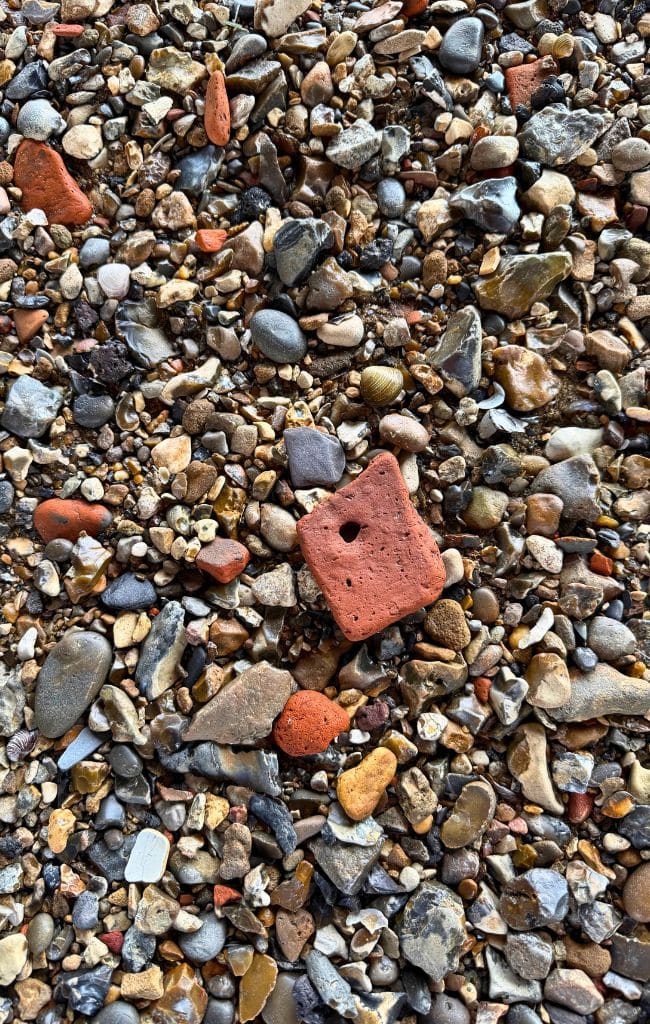
When I first started, I couldn’t see anything other than the rocks and stones, smoothed and polished by the constant tidal currents. But once my eyes adjusted, I began to spot items; tiny fragments of pottery, bits of clay pipes and a couple of roof tiles.
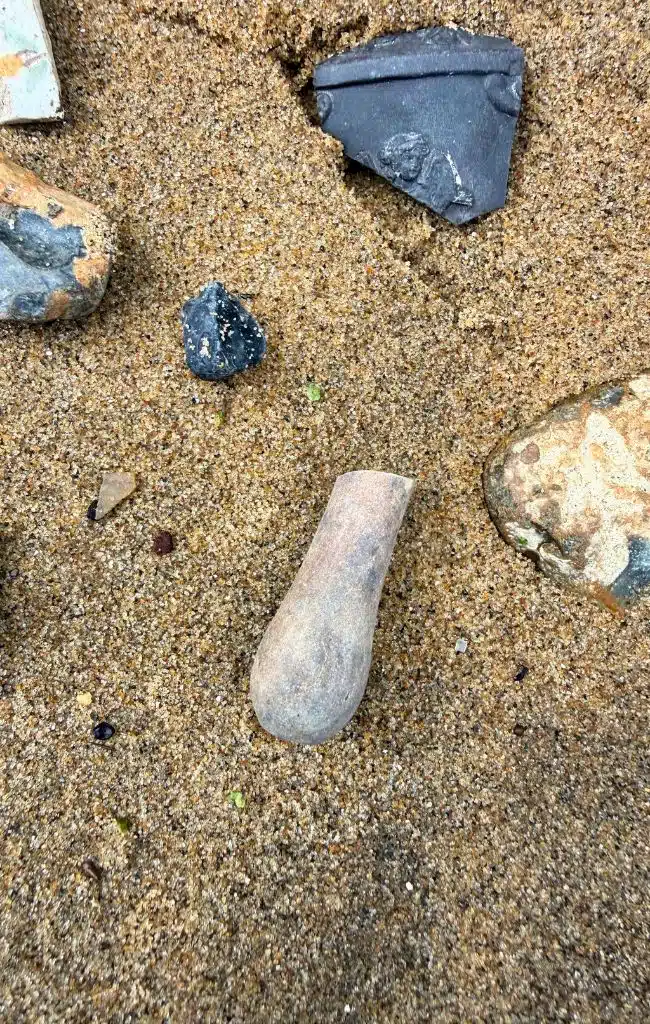
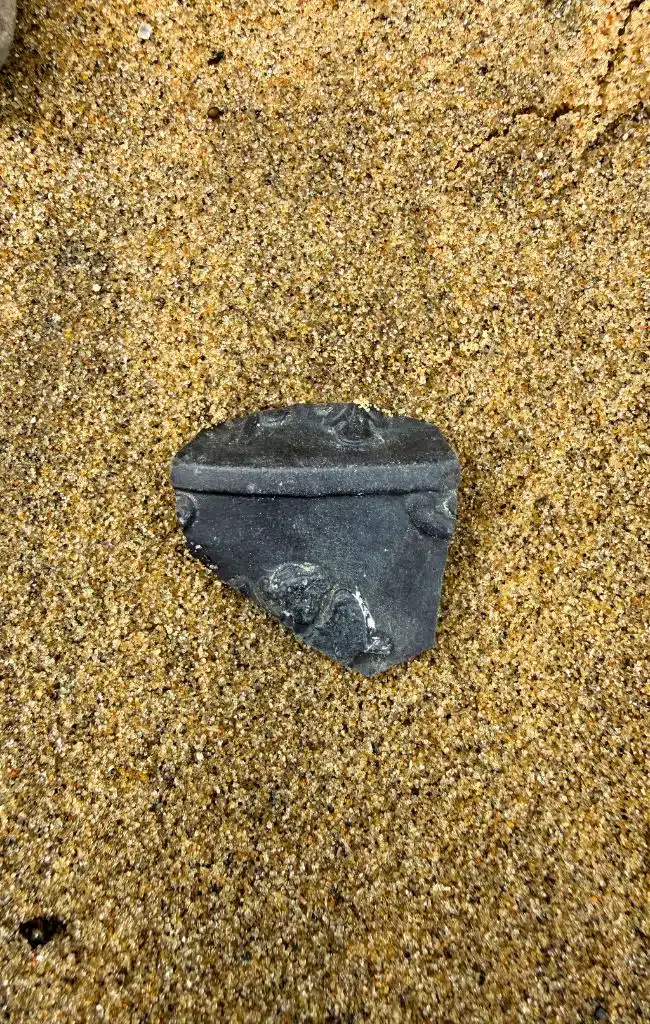
I picked up what looked like a small wooden handle and later a sliver of black pottery, engraved with a just-seen cherub. Sean later explained that the handle was actually part of a Georgian wig curler and the shard of pottery was black basalt ware, an unglazed black stoneware pioneered by English potter Josiah Wedgwood around 1768.
It’s a fascinating experience and an extraordinary insight into London’s past lives. As I picked up another pipe stem (so ubiquitous they feel like the Victorian answer to the modern day vape), I began to wonder who its owner had been and how it came to be in the river.
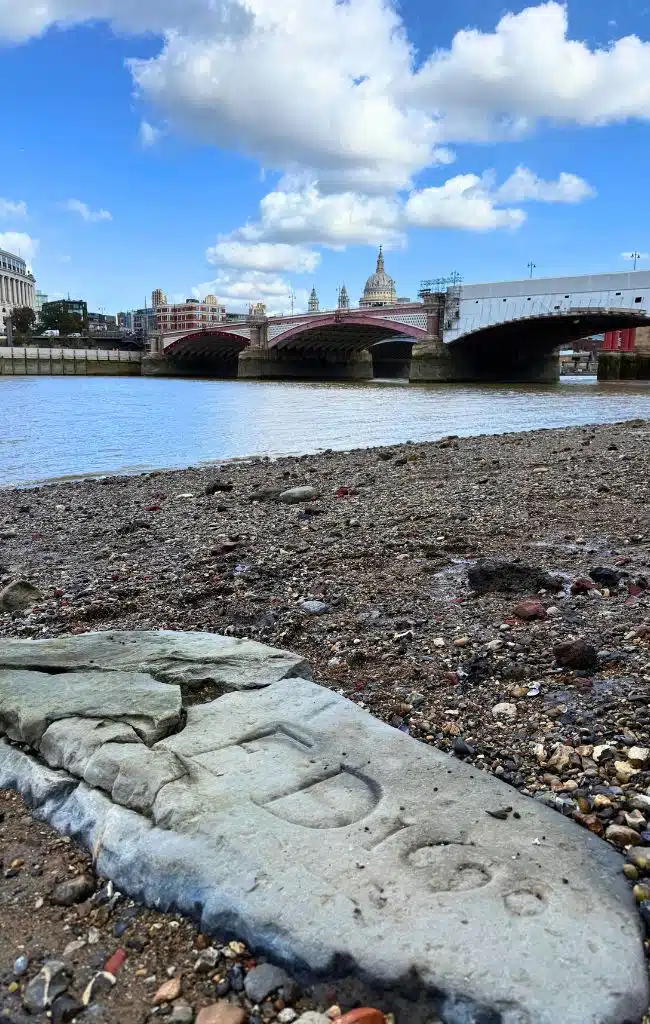
Sean was on hand to answer questions and at one point showed us some medieval graffiti, the initials ED engraved on a stone with the date, 1690.
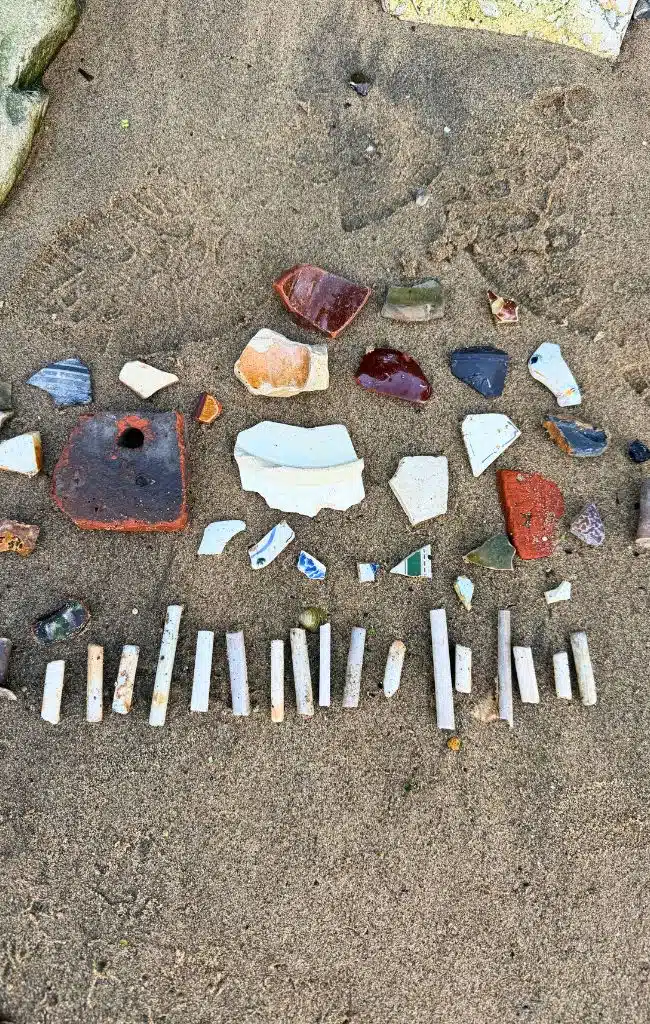
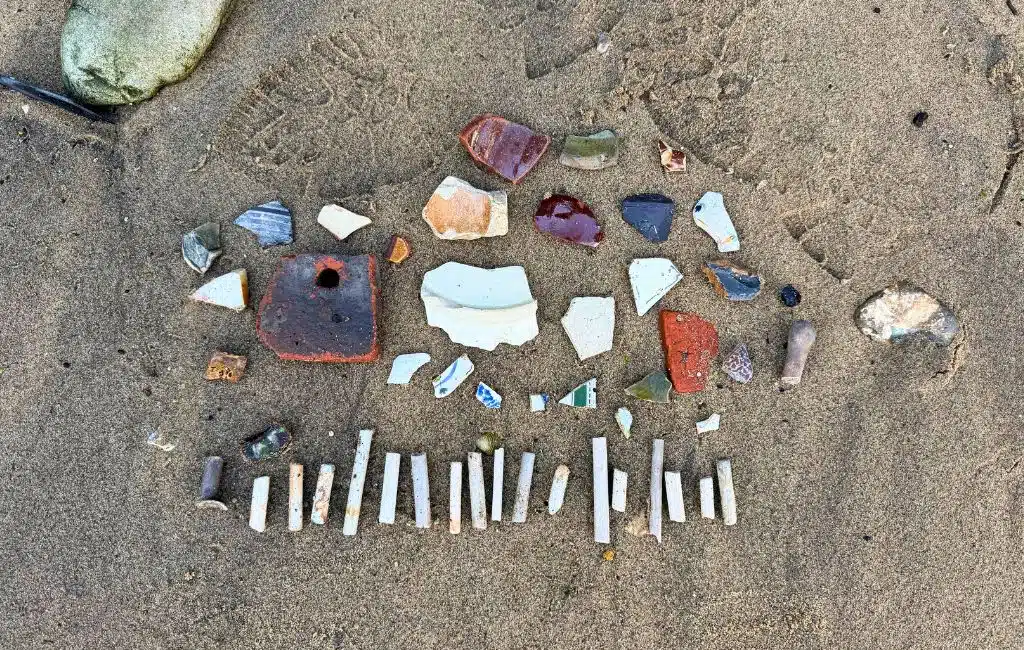
When the hour was up, Sean told us to lay out our finds so he could identify pieces. Despite exploring the same section of the foreshore, everyone’s finds were so different.
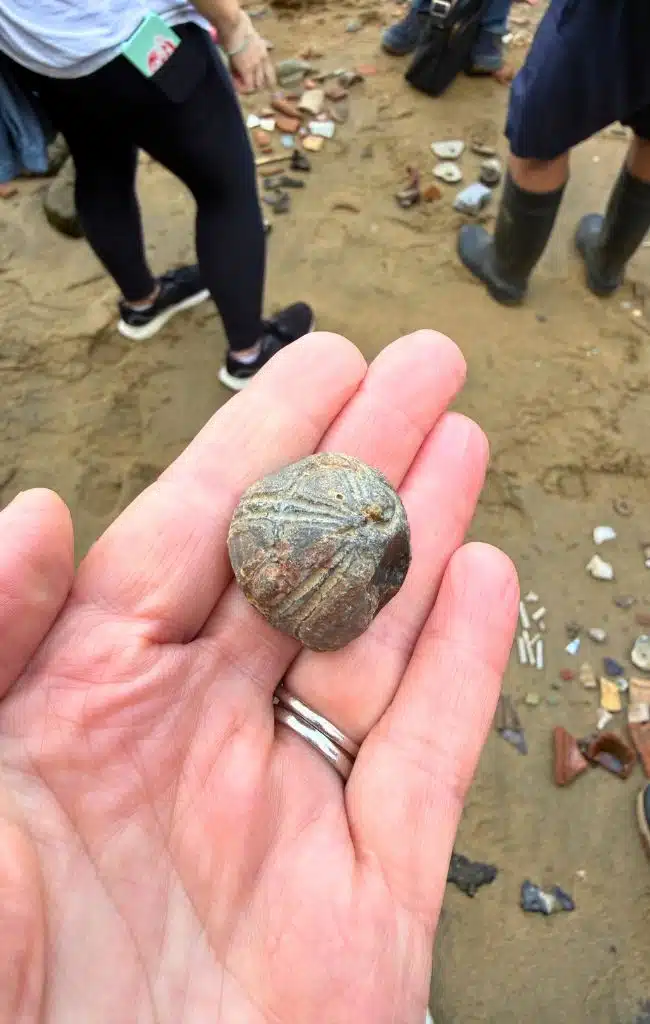
One man discovered a fossilised sea urchin and another a piece of coral. There were a couple of pieces of old leather, some fossilised wood, lots of kiln waste and a huge mixture of pottery shards from the Tudor and Stuart periods.
When it was time to go, we left our finds on the river banks, ready for the high tides to take them back out into the river.
What you need to know about mudlarking tours
Mudlarking tours – much like the mudlarking permits – are very popular and sell out in advance so make sure to book well head. All tours are “eyes only”, meaning that you can’t take anything with you.
Only licensed mudlarkers / permit holders can remove items. That said, if you happen to find an item of historical importance, you have to report it to the Finds Liaison Officer at the British Museum.
In addition to having an expert on hand to tell you what to look for – and identify anything that you find – it’s really worth taking a mudlarking tour because the Thames is a tidal river, and you don’t want to get caught when the tide turns. Similarly, a guide knows the best places to go mudlarking.
Although the Thames runs for over 200 miles, mudlarking focuses on the tidal section flowing through the city. Some areas are historically richer and some are more accessible. Some, I imagine, the expert mudlarkers keep for themselves!
What to bring on your mudlarking tour
Fortunately, it was a sunny and dry day when I turned up to my mudlarking tour in my trainers and jeans but I would recommend being better prepared than me, particularly during winter months. Mudlarking doesn’t require much equipment but you are outside the entire time and consequently, there are a handful of things that will make the experience more comfortable.
- Waterproof boots with good grip: Wellies work, but dedicated waterproof hiking boots are better, particularly if you are going mudlarking during the winter.
- Gloves: I didn’t bring any gloves with me but I would recommend bringing rubber gloves to protect your hands both from possible cuts and the Thames River water itself. Whether you are wearing gloves or not, make sure to wash your hands thoroughly with soap and water afterwards.
- A small bag or bucket: Your guide usually provides a small ziplock plastic bag to put your finds in but there’s no harm in bringing your own.
- Knee pads: Seasoned mudlarkers have knee pads, which definitely makes exploring the foreshore easier than crouching.
- A camera: or your phone for taking photso
- A notebook: If you want to record what you find.
How to book a London mudlarking tour
I booked my mudlarking in London tour, In the Footsteps of Mudlarks, via the Thames Explorer Trust. Tours cost £30 per person (all ages) and last for two hours. The time and location of the tours depend on the tide times.