
One of the things that I love most about London is just how many small and unusual museums there are in the city. Case in point, the Florence Nightingale Museum.
Located on the grounds of St Thomas’ Hospital, a short walk from Waterloo station, the museum is dedicated to the founder of modern nursing and is definitely worth a visit. I think it’s an excellent museum and one that’s well worth visiting. Here’s what you can expect.
Disclosure: This post may contain affiliate links. I have been or could be if you click on a link in this post compensated via a cash payment, gift or something else of value for writing this post. See our full disclosure policy for more details.
Who was Florence Nightingale?
But first, who was Florence Nightingale?
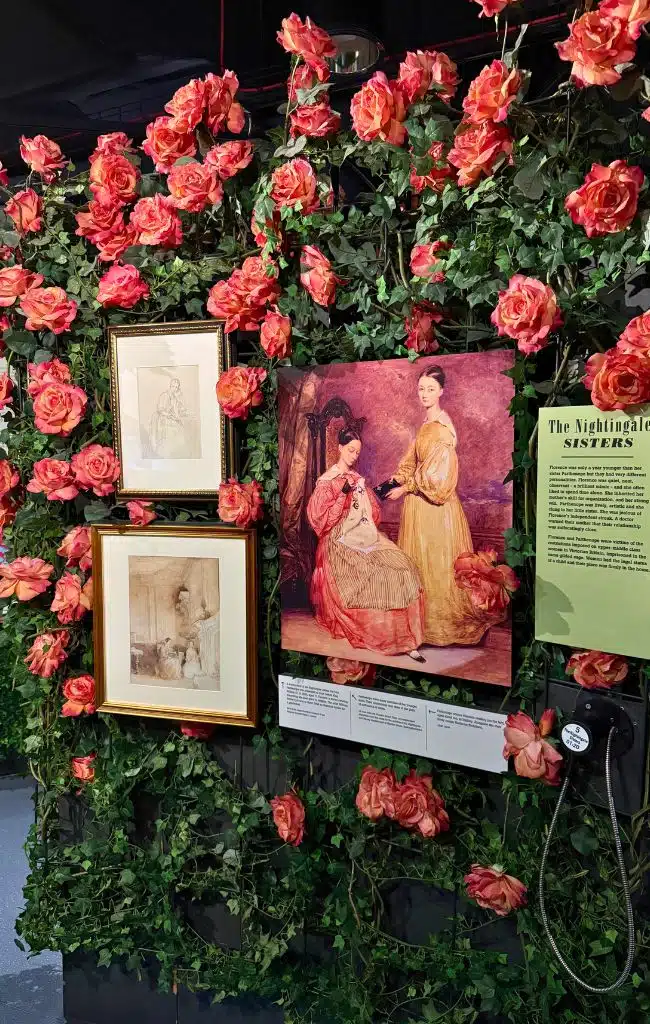
Like me, you might have heard stories of the “Lady of the Lamp” but I had no idea just how much Florence Nightingale accomplished in her lifetime until my visit to the museum. Born into a wealthy family in 1820 in Florence, Italy – the city she was named after – Florence and her older sister, Parthenope, enjoyed a privileged childhood.
They were educated at home by their father and, unusually for girls of that time, were taught a huge range of subjects including Greek, Latin, history, philosophy and mathematics.
As a teenager, Florence felt a “calling” from God to go into nursing. Her parents, however, thought this was a terrible idea. Nursing was not considered a respectable profession, and certainly not one fit for a woman of her class and standing.
Florence, however, was nothing but determined. During travels across Europe and Egypt she made a point of visiting hospitals and eventually trained at Kaiserswerth (a pioneering protestant hospital) in Germany and in 1853, she became the superintendent of a small hospital for gentlewomen on Harley Street in the heart of London.
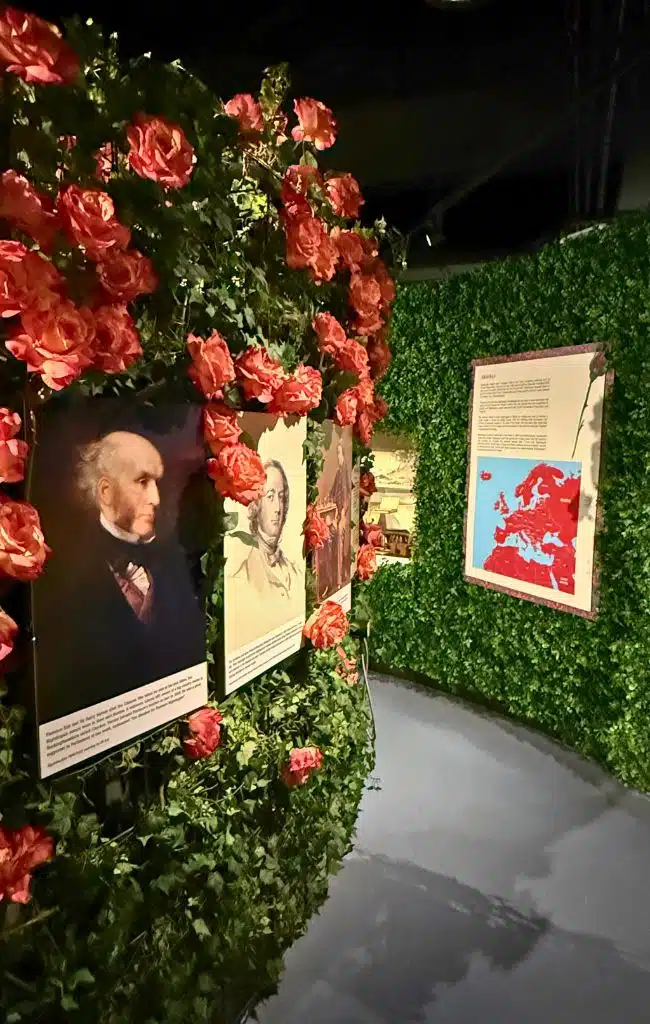
In October 1853 the Crimean War broke out and it wasn’t long before newspapers were filled of reports of wounded soldiers dying in appalling conditions. Florence’s friend – and Secretary at War – Sidney Herbert asked Florence for help and, in October 1854, she set sail along with 38 nurses. Florence took charge organising the hospitals, improving hygiene, supplies, food and laundry. Her late-night rounds of the wards, checking on the men by lamplight, earned her the famous nickname.
She returned to London a national heroine and used her fame to open the Nightingale Training School for nurses at St Thomas’ Hospital in 1860, the same hospital where the museum stands today.
She continued to campaign for health reform, wrote some 200 books – including the bestselling Notes on Nursing – and was a pioneering statistician. She eventually died in 1910 at the age of 90.
Where Is the Florence Nightingale Museum?
The museum is located on the grounds of St Thomas’ Hospital, on the site of the original Nightingale training school.
What to expect inside the Florence Nightingale Museum
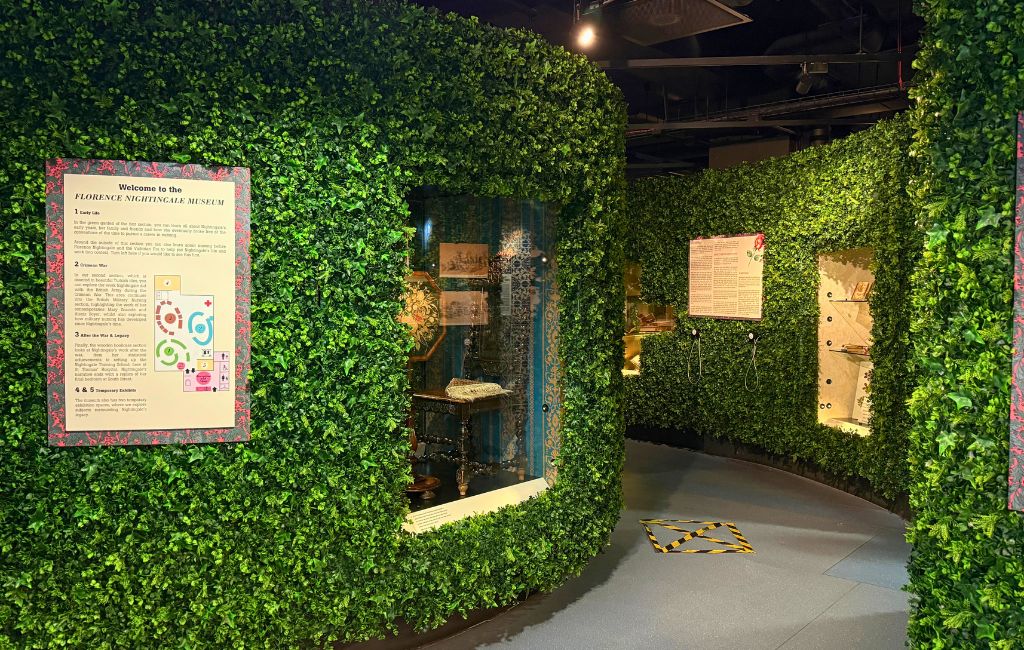
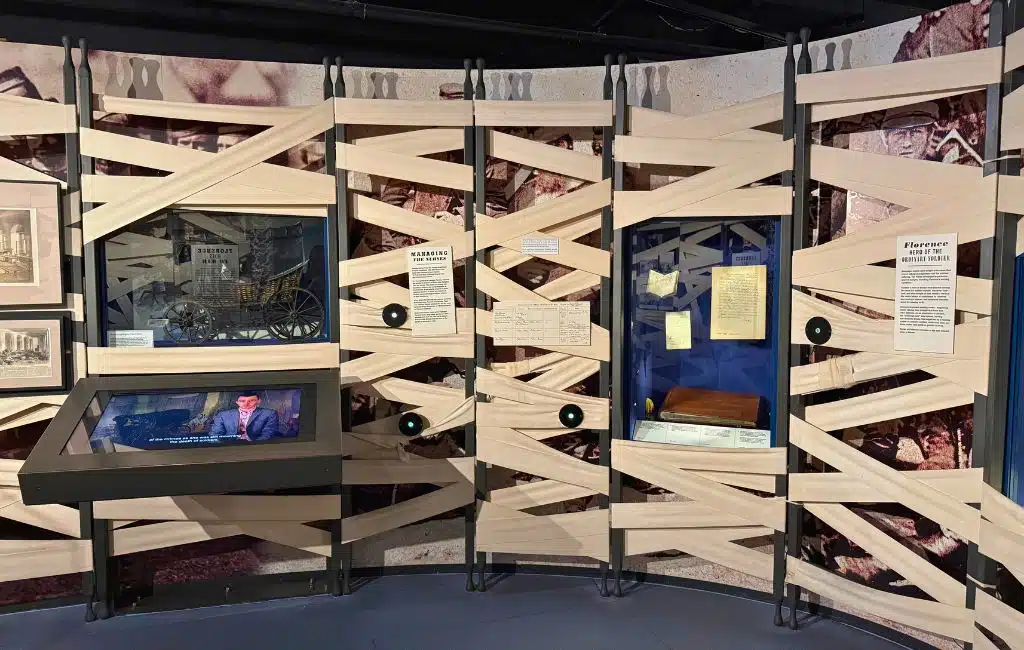
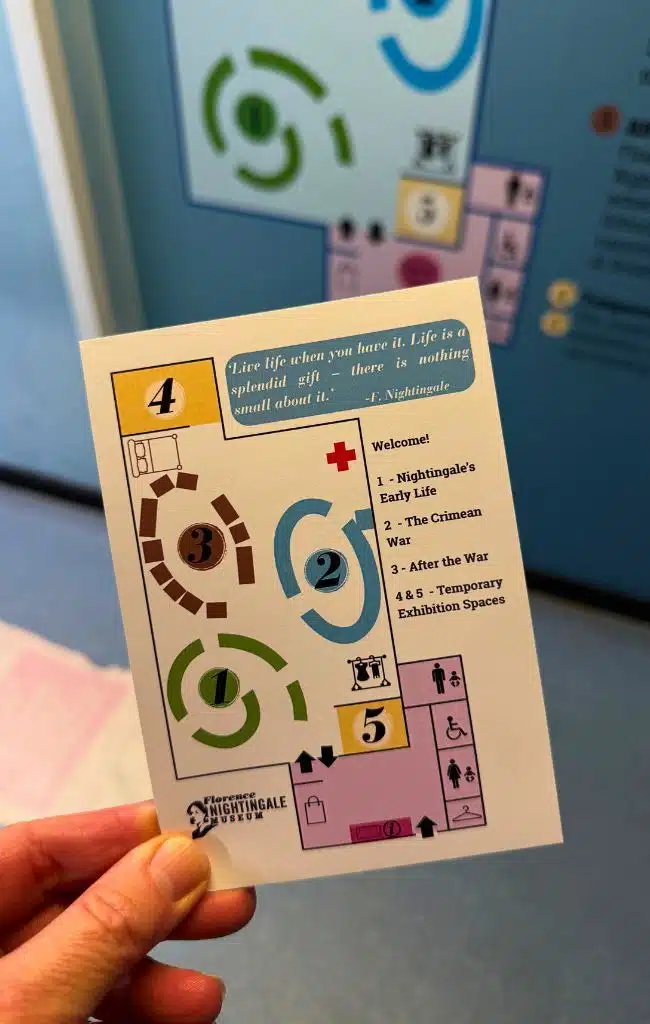
The museum is set out in three sections. The first covers Florence Nightingale’s early life, the second section focuses on the Crimean War and the final section explores Florence’s life after the war, and includes a replica of her bedroom from her later life when she lived in London’s South Street.
There are also two temporary exhibition spaces, one immediately as you enter the museum that focuses on women in nursing and social history, which changes every six months and a larger temporary exhibition space that changes annually.
Florence Nightingale’s Early Life
The first section of the museum explores the early life of Florence Nightingale and includes lots of information on her childhood, her teenage years and how she went against her parents’ wishes and became a nurse.
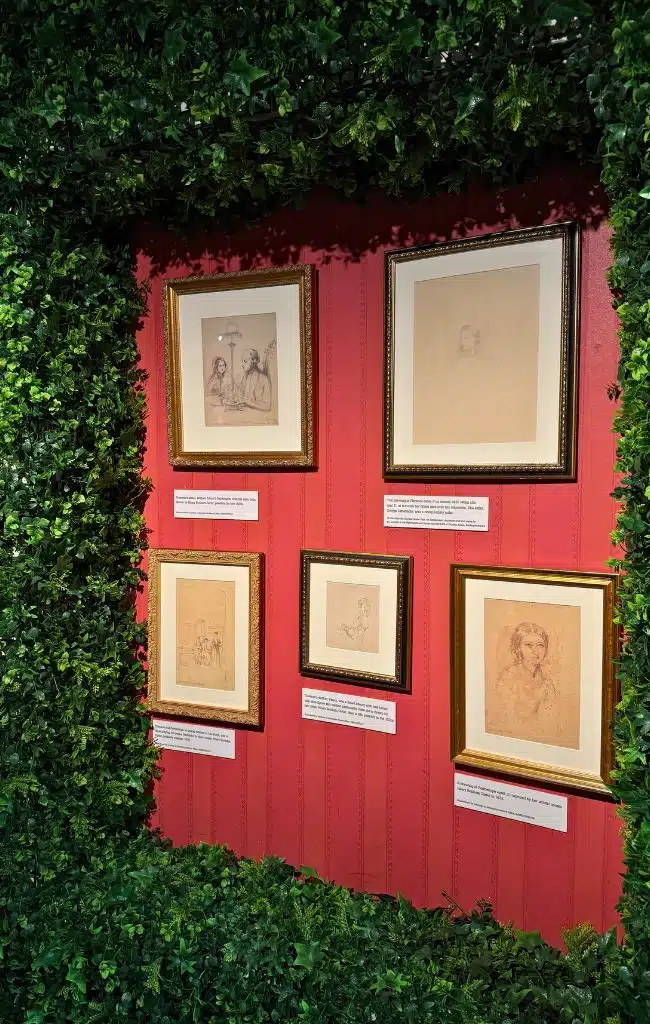
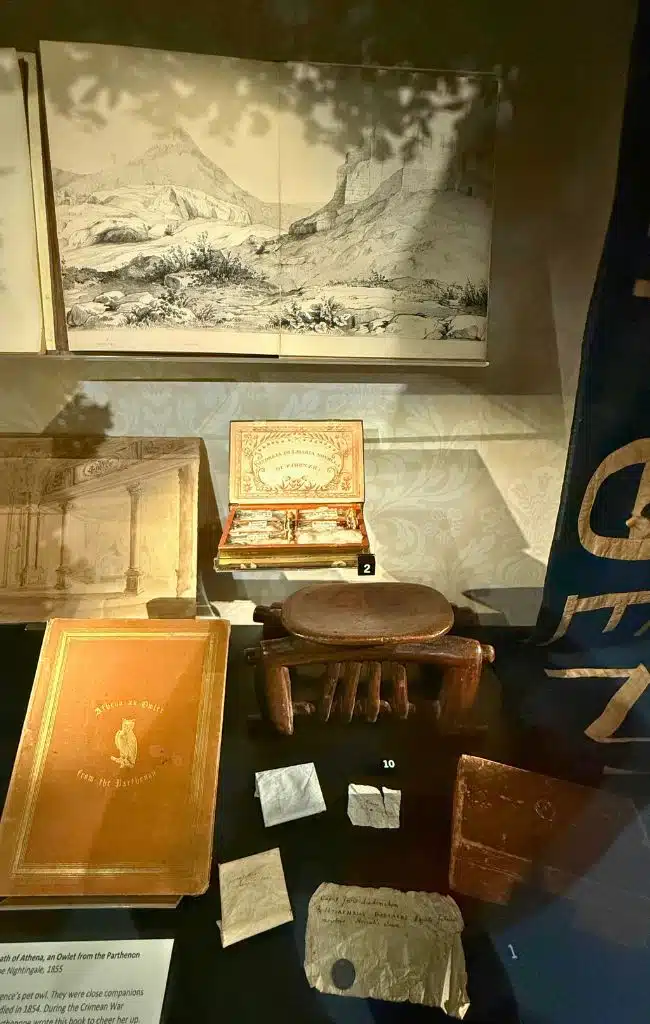
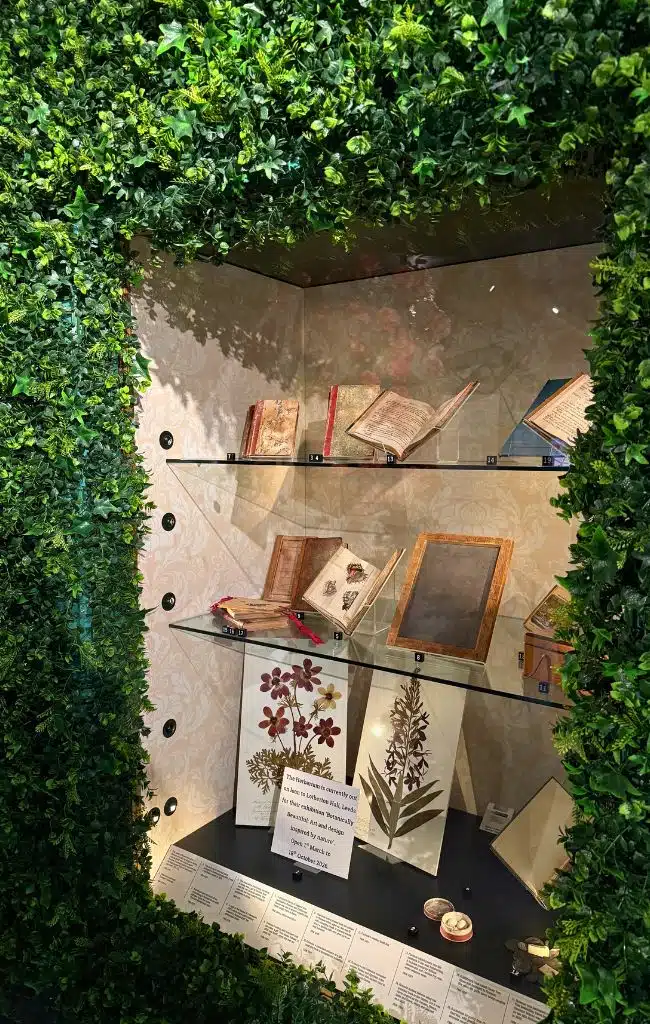
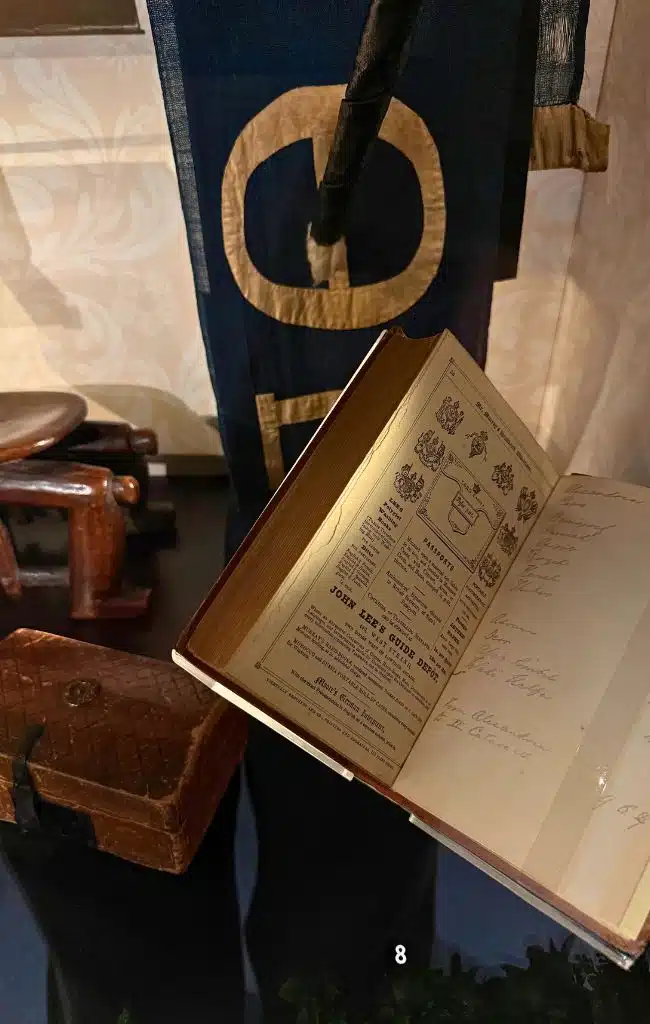
There are some fascinating historical artefacts on display from Florence’s early life including drawings of her and her sister as children, captured by their artistic cousins Hilary Bonham Carter (a quick Google revealed that yes, the cousin is related to the actor Helena Bonham Carter!). Also on display are some of Florence’s childhood books, shells and seeds that she collected on her travels, and letters that she wrote home while travelling down the Nile.
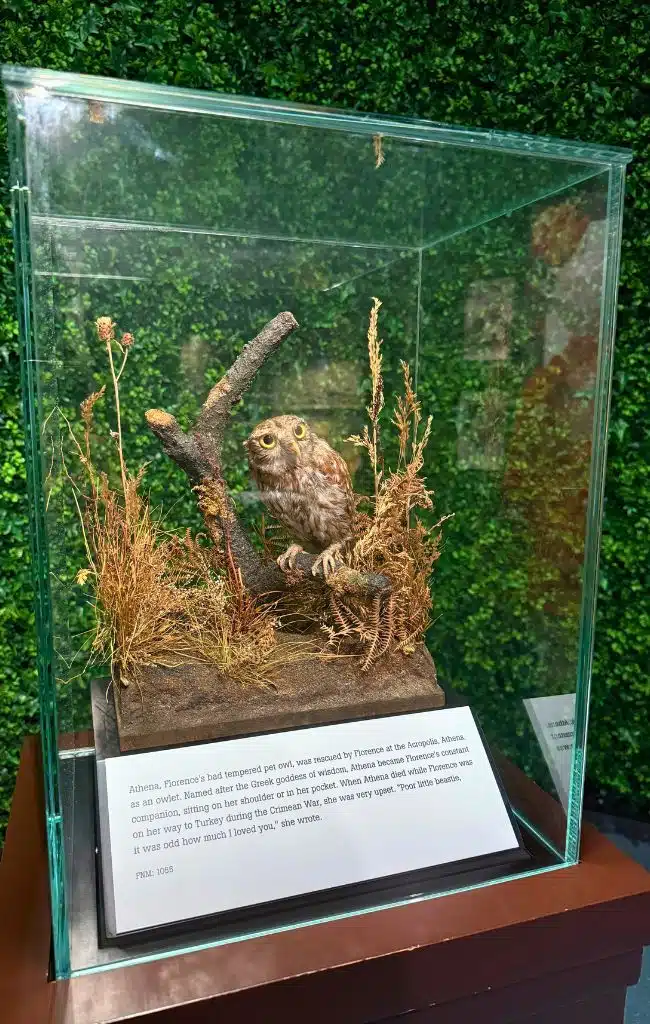
You’ll also see Florence Nightingale’s beloved pet owl, stuffed and on display in a glass box. Apparently, Florence rescued the little owl while at the Acropolis in Athens and named it Athena, taking it everywhere with her. When it died, shortly before Florence left for Crimea, her family had it taxidermied.
The Crimean War
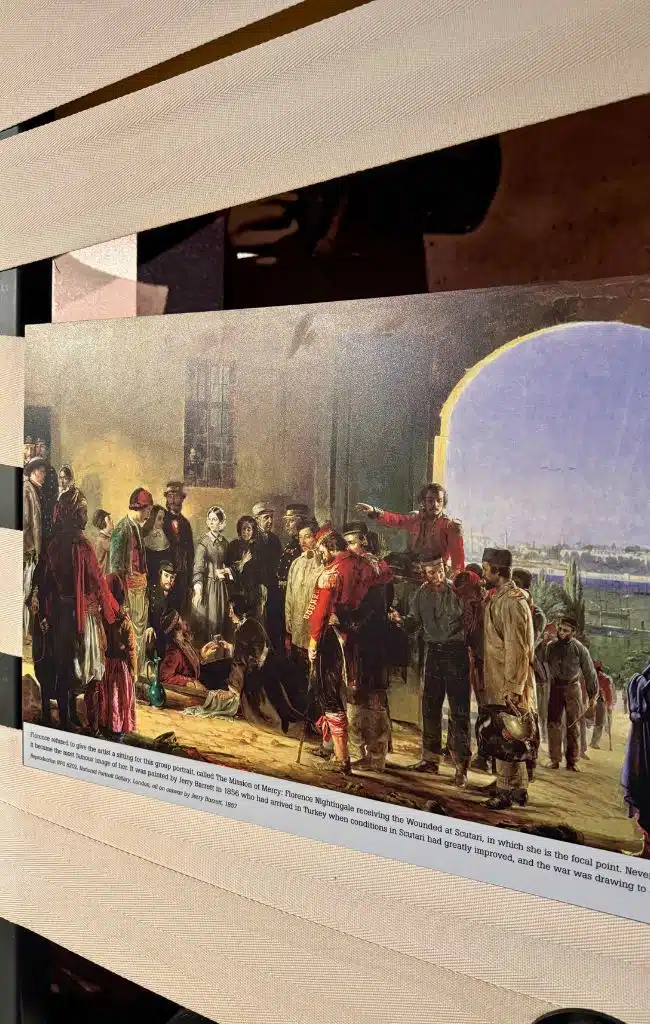
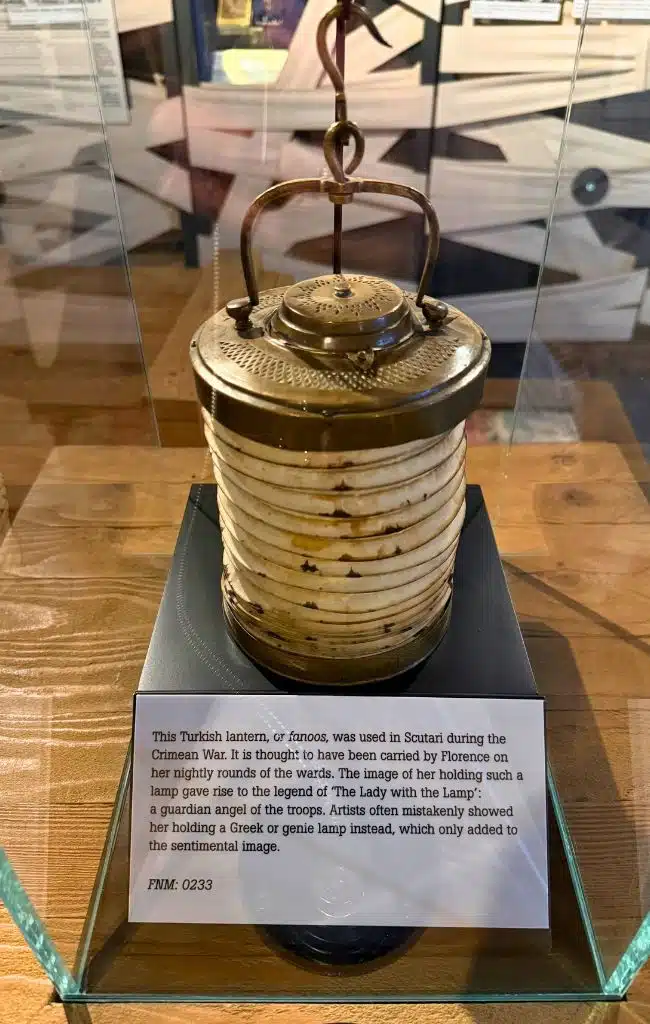
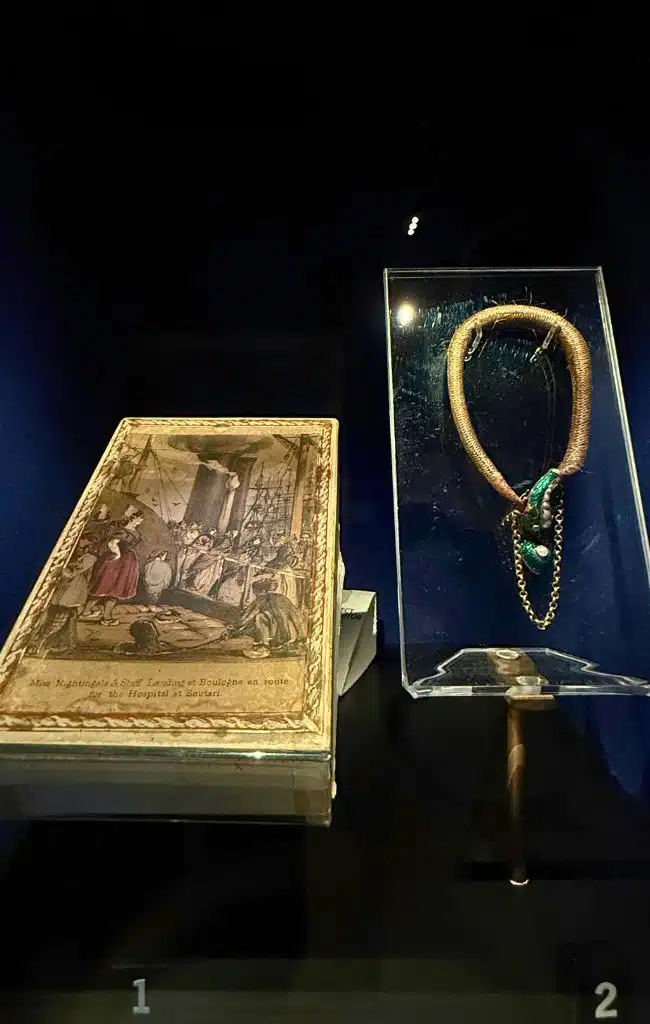
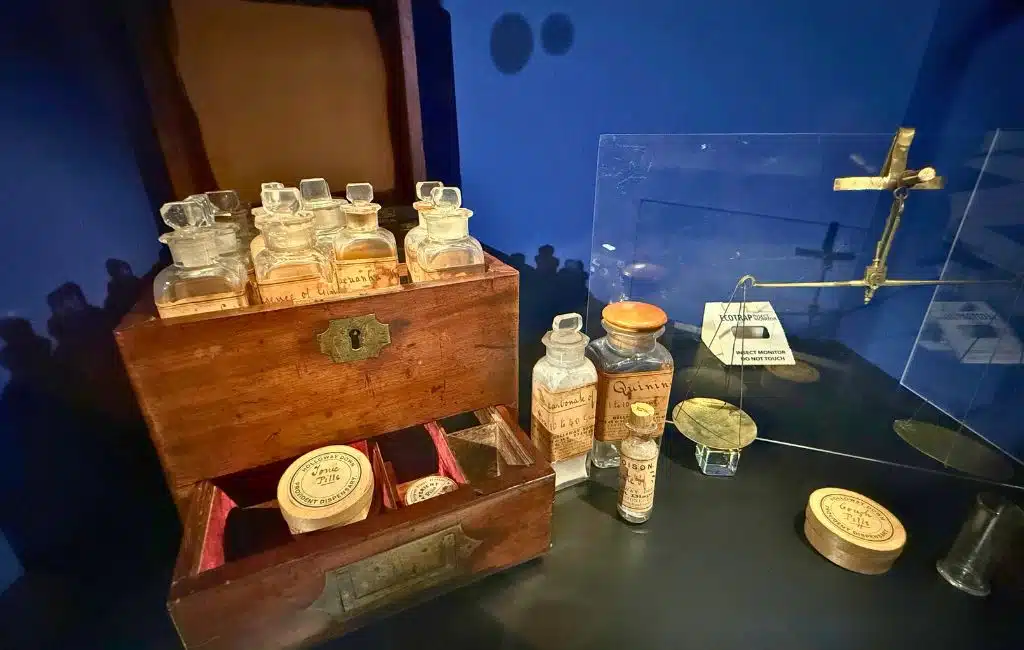
The second section of the Florence Nightingale Museum focuses on her time in the Crimea and includes some incredible objects once belonging to Florence Nightingale including her medicine chest, a rare register of nurses who worked at the British military hospitals during the Crimean War. Altogether there were 229 nurses. It also includes the actual lamp that Florence used on her nightly rounds.
There’s also a section on the history of military nursing with interviews of people still serving in the army and airforce today.
After the War
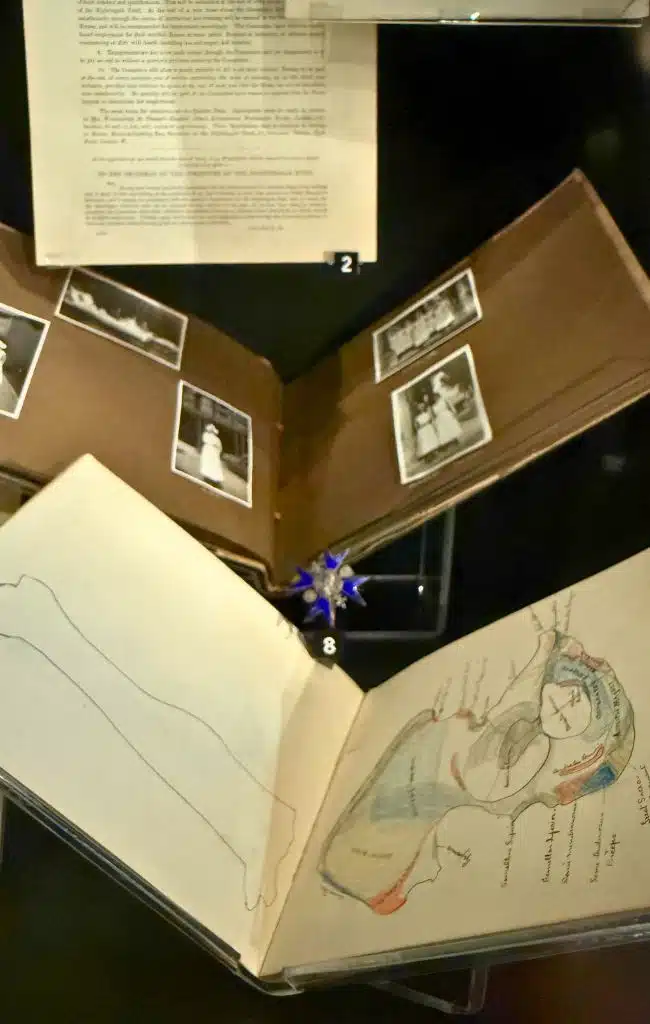
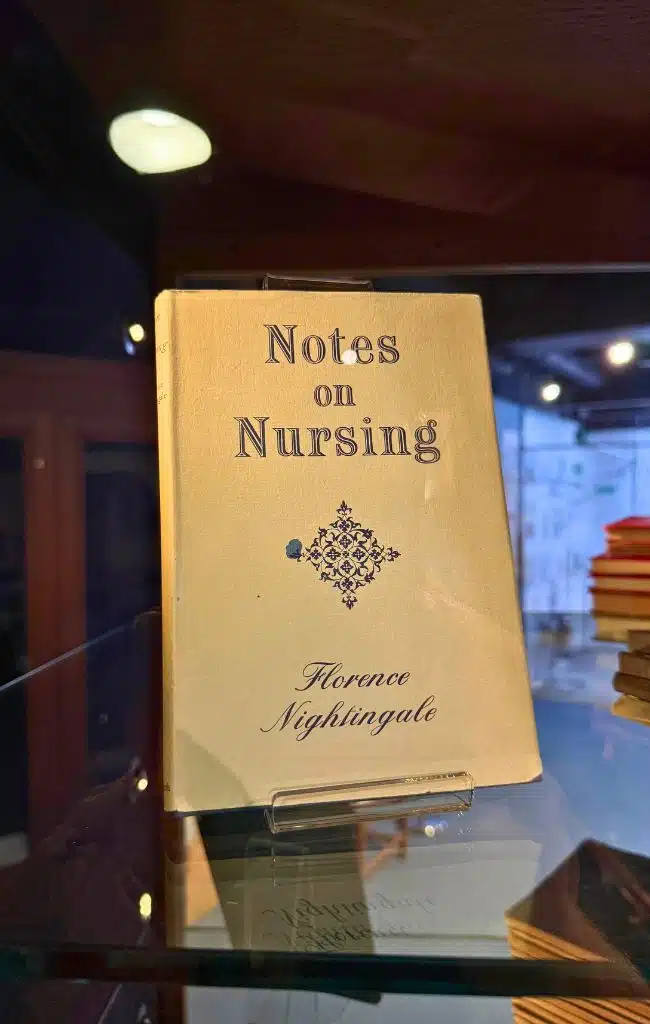
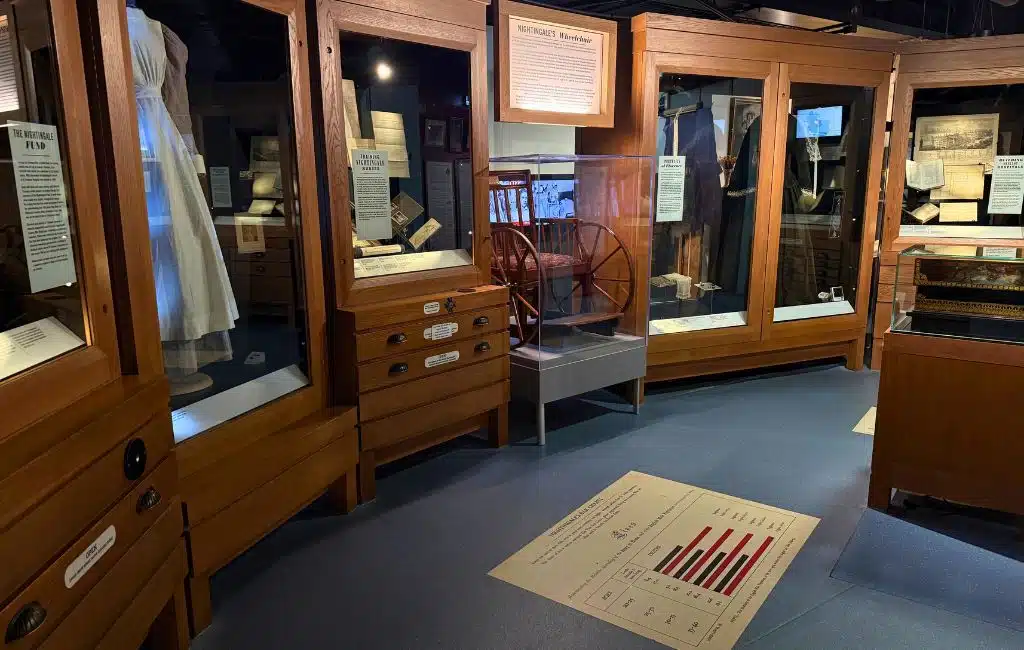
The final section focuses on Florence Nightingale’s life after the war, her campaigning and her writing. This includes her work establishing the Nightingale Training School for nurses, the many books and papers that she authored, and her work as a statistician. She was the first female member of the royal statistical society – her work continues to shape modern data visualisation, epidemiology, and healthcare policy today – and her book Notes on Nursing became an immediate bestseller, even Queen Victoria was a fan.
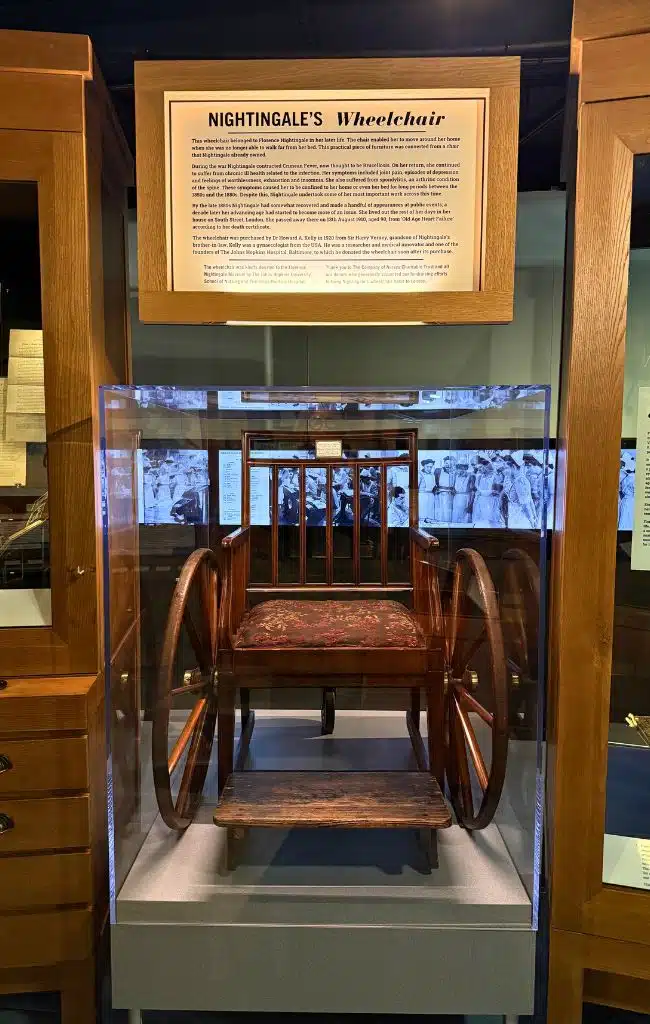
Among the items on display are Florence’s wheelchair that she used in later life and some of her clothing.
Every section has “audio hotspots” where you can pick up a single-ear headphone and listen to more stories about the life of this trailblazing woman.
Highlights not to miss
There are so many interesting things to see here.
Obviously, the Turkish lantern that Florence used on her nightly rounds of the wards while in the Crimea is a highlight. Other things worth looking out for are Florence’s constant companion, her pet owl, a bracelet woven from the hair of Florence’s father, mother, sister and favourite cousin that she wore throughout her time in Crimea, a terrifying-looking amputation saw used in the medical hospitals in the Crimea, and the earliest copy of her book Notes on Nursing, from 1860.
Also on display is a copy of Alexis Soyer’s army stove. A celebrated French chef living in England at the time of the Crimea War, Alexis travelled to battlefields and introduced the portable “Soyer Field Stove”, which was used by the British army for the next 120 years.
Is the Florence Nightingale Museum good for kids?
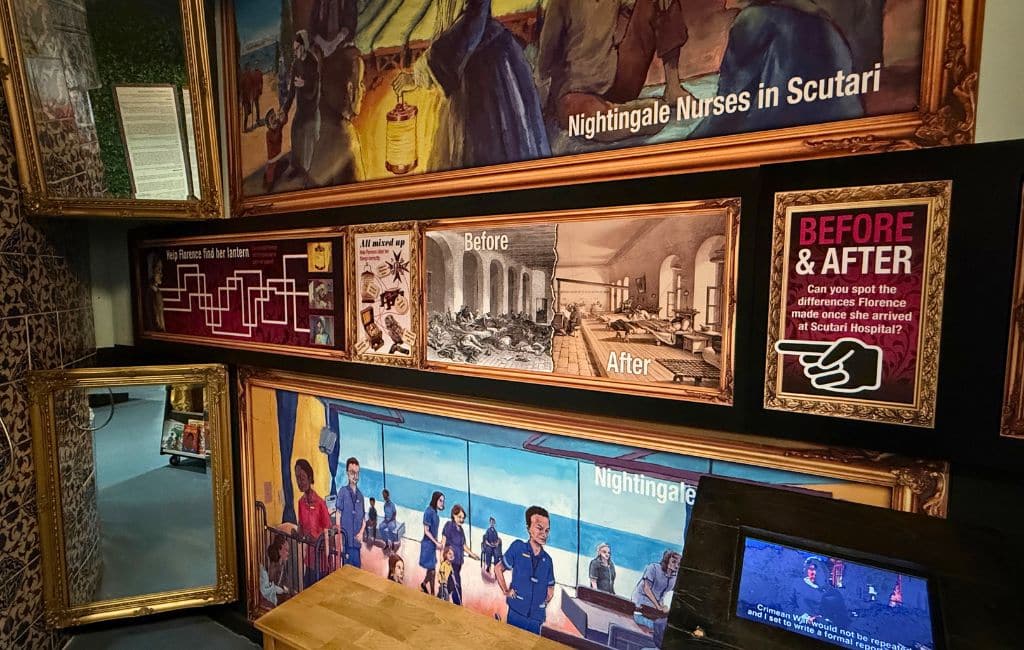
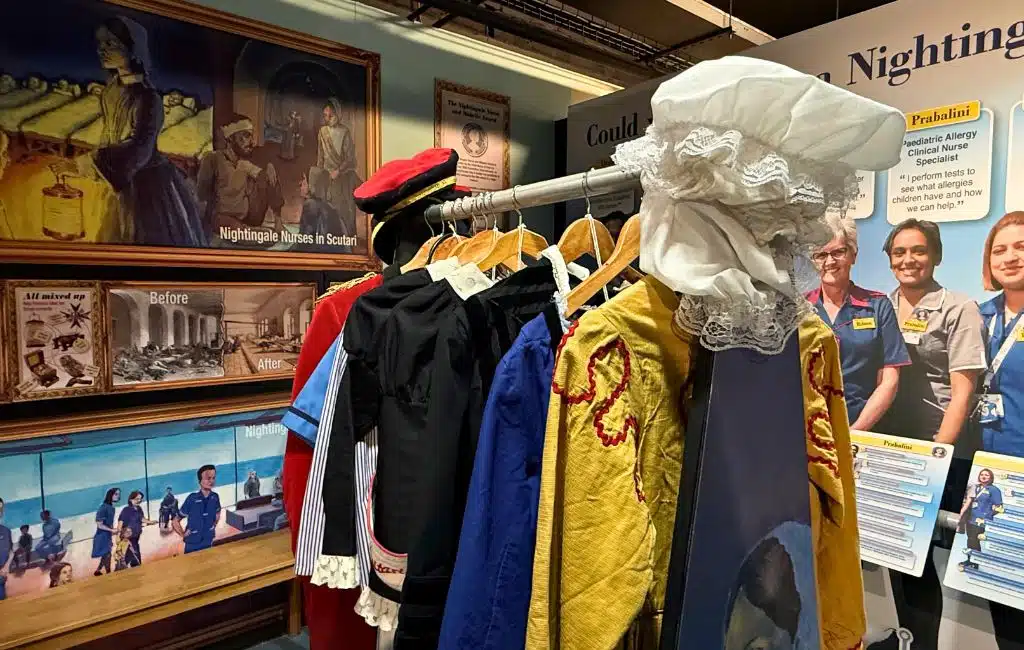
The Florence Nightingale Museum is great for kids. In addition to the family trail, which is always a good way to keep children entertained, there’s a dedicated section for kids. Here you’ll find storybooks, games and the chance to dress up in costumes. There’s also an area where with props – including a replica of the famous lamp – where you can snap some photos.
Elsewhere in the museum, there are interactive displays to keep kids busy such as learning to copy Florence’s signature and understanding statistics with an interactive display.
Time your visit for the 2nd Saturday of the month and kids can meet Florence herself. Taking place at 11:30am, 1:30pm and 3:30pm, the 30 minute performances are included in admission and are a great way for children to hear from Florence Nightingale herself about the story of her life.
Practical Information
Location: The Florence Nightingale Museum is inside the grounds of St Thomas’ Hospital, at Lambeth Palace Road, London SE1 7EP, on the South Bank, right across the river from the Houses of Parliament. You don’t have to go into the hospital buildings to reach it. The entrance is on Lambeth Palace Road, down a gently sloping pavement.
Getting there: The nearest stations are Westminster (Jubilee, District and Circle lines) and Waterloo (Bakerloo, Jubilee, Northern and Waterloo & City lines, plus mainline trains). Both are around a 10-minute walk. Lambeth North is also close. From Westminster, the walk across Westminster Bridge gives you one of the best views of Big Ben, so it’s worth arriving that way.
Opening days and times: Open Tuesday to Sunday, 10am–5pm (last entry 4:30pm). Closed on Mondays. On the last Thursday of each month it stays open late, until 8pm.
Ticket prices: Adult: £12. Concession (over-65s, Blue Light Card holders, disabled visitors): £10. Student (with valid ID): £7. Child (5–16): £6. Family (2 adults and up to 4 children): £30. Under-4s: free. Essential carers of disabled visitors: free. Art Fund National Art Pass holders get 50% off adult and student tickets.
Top tip: Tickets bought directly from the Florence Nightingale Museum are annual passes, so you can come back as often as you like for a year. Just sign the back of your ticket to validate it.
Booking: You can book online in advance or buy tickets at the door. In my experience, you don’t need to book ahead. Groups of 10 or more need to pre-book a time slot.
How long does a visit take?: The museum recommends 45–75 minutes. I spent about an hour here, which felt like enough time. It’s a compact museum, which makes it easy to fit into a busy day of sightseeing.
Best time to visit: Avoid Tuesday to Friday between 10am and 2pm during school term, which is when primary school groups usually visit. Weekday afternoons are generally the quietest, and the last-Thursday late openings are a calmer way to see the museum. If you’re visiting with kids, time your visit for the second Saturday of the month when Florence Nightingale herself appears!
Accessibility: The museum is all on the ground floor and fully wheelchair and pushchair accessible. It has accessible toilets, and the male and female toilets have baby-changing facilities. The nearest Changing Places toilet is at the hospital’s main entrance (borrow a RADAR key from hospital security). Assistance dogs are welcome. There’s no museum car park. The nearest drop-off point and parking are at St Thomas’ Hospital.
Facilities: The museum has a gift shop, a free digital guide and a small unstaffed cloakroom with free lockers for small bags. Large bags and suitcases can’t be stored, so use the left-luggage service at Waterloo Station if you need it.
What to combine it with nearby:
- The Mary Seacole statue: in the hospital gardens next door, honouring the Jamaican-British nurse who also cared for soldiers in the Crimea.
- Houses of Parliament and Big Ben: just across Westminster Bridge.
- The London Eye and the South Bank: a 10-minute stroll away, with lots of places to eat.
- The Garden Museum: another one of London’s excellent small museums, this one located next to Lambeth Palace, about 10 minutes south along the river.
- Westminster Abbey: about 15 minutes’ walk away.
- Imperial War Museum: around 20 minutes on foot.
