It’s a suitably dark and drizzly October evening when I meet my tour guide Musa near Aldgate East station. I’m here for a Jack the Ripper walking tour organised by Empire Tours. This two-hour small group journey promises to follow in the footsteps of the infamous Victorian serial killer who terrorised the Whitechapel area during 1888’s autumn of terror.
To this day, Jack the Ripper has never been identified but, you never know, maybe tonight is the night when we find out who was really behind the brutal Whitechapel murders.
In this post I’ll cover who Jack the Ripper was (or might have been), what the Jack the Ripper tour is like, the places you’ll see along the way, how to book and – most importantly for families -whether or not this tour is suitable for kids.
Disclosure: This post may contain affiliate links. I have been or could be if you click on a link in this post compensated via a cash payment, gift or something else of value for writing this post. See our full disclosure policy for more details.
Who was Jack the Ripper?
Table of Contents
The short answer is that nobody knows who Jack the Ripper was.
You may have seen sketches or images depicting a shadowy, anonymous figure in a top hat and coat or gas-lit Victorian street scenes – you may have “seen” him on a visit to the London Dungeon – but he remains to this day an unidentified killer who murdered five women within about 15 minutes’ walk of each other in the Whitechapel neighbourhood between August and November 1888.
The killer was never caught, and more than 135 years later the case is still the most famous unsolved murder in the world.
To understand the crimes, it’s important to understand what London’s East End was like during this period. While much of Victorian Britain was getting rich fast, large swathes of Victorian London were living in poverty. Wealthy Londoners moved to the west of the city but the poor crowded into the east, packing into tenement slums and lodging houses.
It’s hard to imagine wandering around Brick Lane and the surrounding neighbourhoods today but at the time, this area was notorious for its abject poverty, its overcrowding, its lack of clean water, its inhumane factory conditions and its rampant unemployment. Alcoholism, robbery and violence were rife.
Added to this were growing social tensions owing to waves of immigrants arriving, mainly Irish workers and Jewish refugees escaping oppression in Europe.e
Women in Victorian London’s East End had a particularly tough time: despite making up over 30 percent of the labour force in the East End factories, the jobs available to them were among the harshest and worst paid. Many were forced into sex work by sheer financial desperation. It was these women who became the victims of Jack the Ripper.
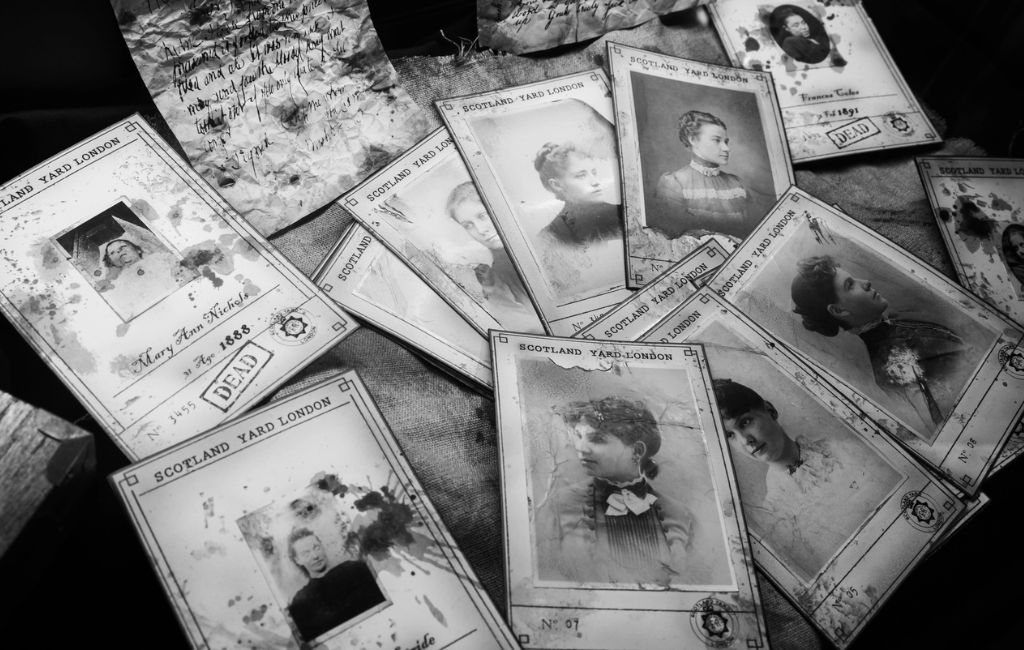
Historians believe that Jack the Ripper killed five women, and these are typically known as the “canonical five”. Whether or not there were more victims is still debated today, largely because the killer was never caught and a further six women were killed around the same time.
Typically, however, when talking about Jack the Ripper – and on this Jack the Ripper walking tour – the focus is on five victims:
- Mary Ann “Polly” Nichols
- Annie Chapman (“Dark Annie”)
- Elizabeth Stride (“Long Liz”)
- Catherine Eddowes
- Mary Jane Kelly
All five women were murdered between August and November 1888, and all in a gruesome fashion. Despite the heinous crimes, however, and the huge public interest in the cases, the murders went unsolved. Police interviewed over 300 suspects but no one was ever charged.
Empire Tours
London is home to lots of tour companies – you’ll spot other groups out at the same time as you are on this Jack the Ripper walking tour – and Empire Tours is one of them.
The company have been around since 2018 and offer a select range of private tours. In addition to the Jack the Ripper tour, they offer Buckingham Palace and the Changing of the Guards tours, a World War II and Churchill War Room tour and, another one for true crime enthusiasts, a London Mobsters Tour: The Kray Twins.
Our guide, Musa, was an American who had been living in London for the last five years. He definitely knew his stuff and was well versed on the history – and conspiracies – surrounding the ripper murders. He was honest about what is known and what is just theory, and while he has his own views on the case and shares them, he also encouraged us to question and make up your own minds.
That said, I think there’s a difference between knowing a subject well and being a great guide. Musa is definitely a good guide but personally I wanted a bit more enthusiasm, a bit more scene setting and, to be honest, a bit more drama.
The Jack the Ripper walking tour overview: Where you’ll go
The guided tour takes place along the streets of Whitechapel in the East End of London, the very same neighbourhood where the notorious serial killer once roamed. The tour takes roughly two hours starting at Aldgate East tube and ending not far from Liverpool Street Station.
Brick Lane and Banglatown
Our first stop is near the Banglatown sign on Brick Lane, so-called, as Musa points out, because bricks were once sold here. We’re given an introduction to life in Victorian England and, in particular, an image of what life was like in the East End of London.
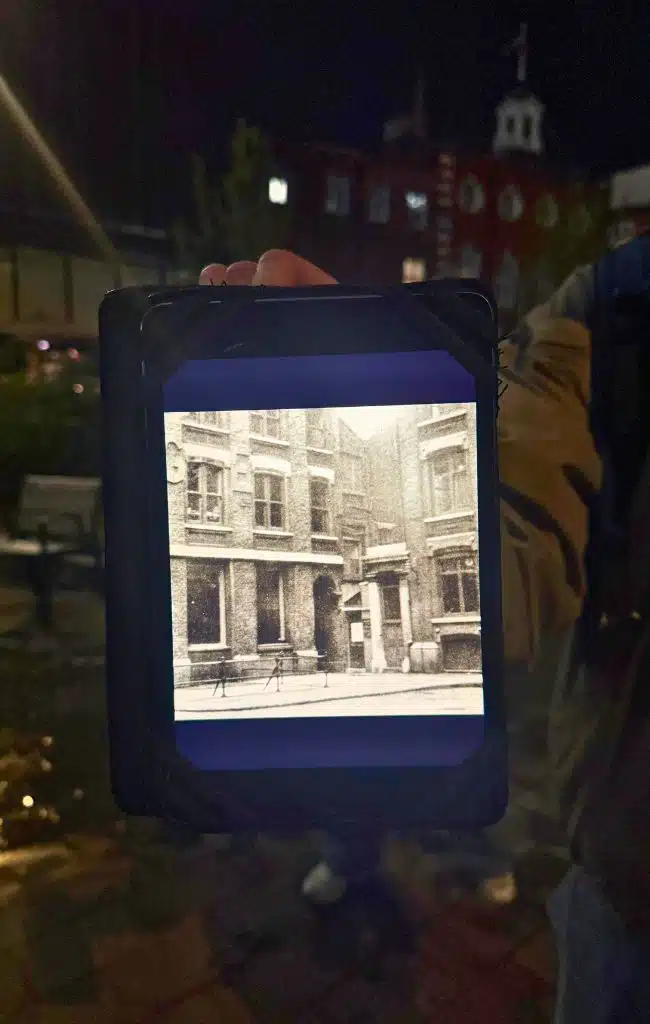
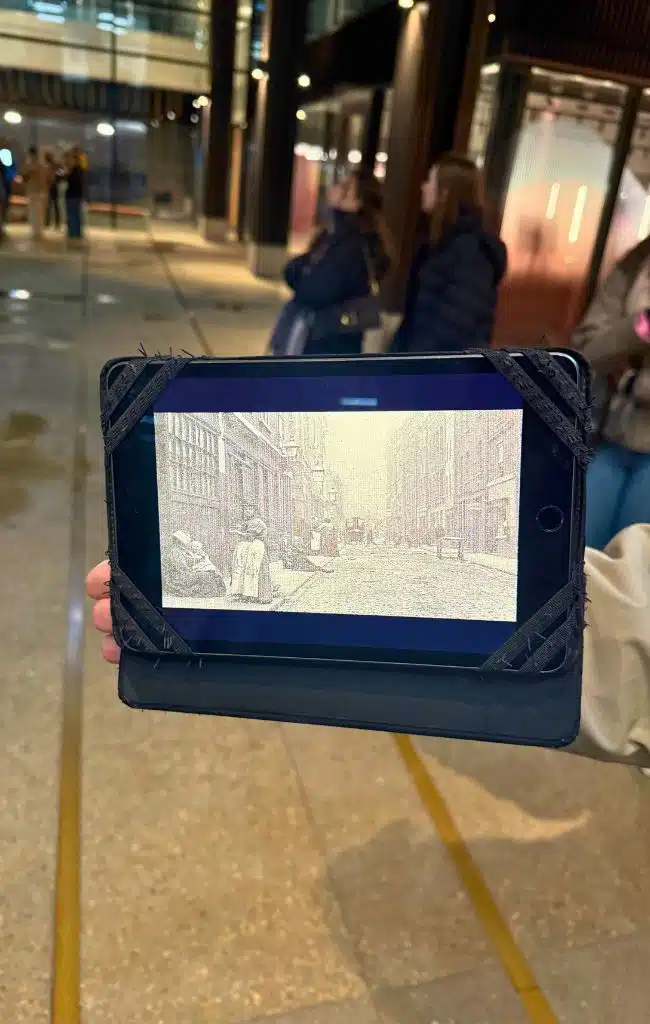
Musa carried an iPad with him, using it throughout the tour to show images (some fairly gruesome), and here showed images of the dosshouses and the so-called coffin beds. Yes, these beds look as bad as they sound and where were the poorest of the poor would sleep, if they afford to pay for a bed.
Ye Frying Pan
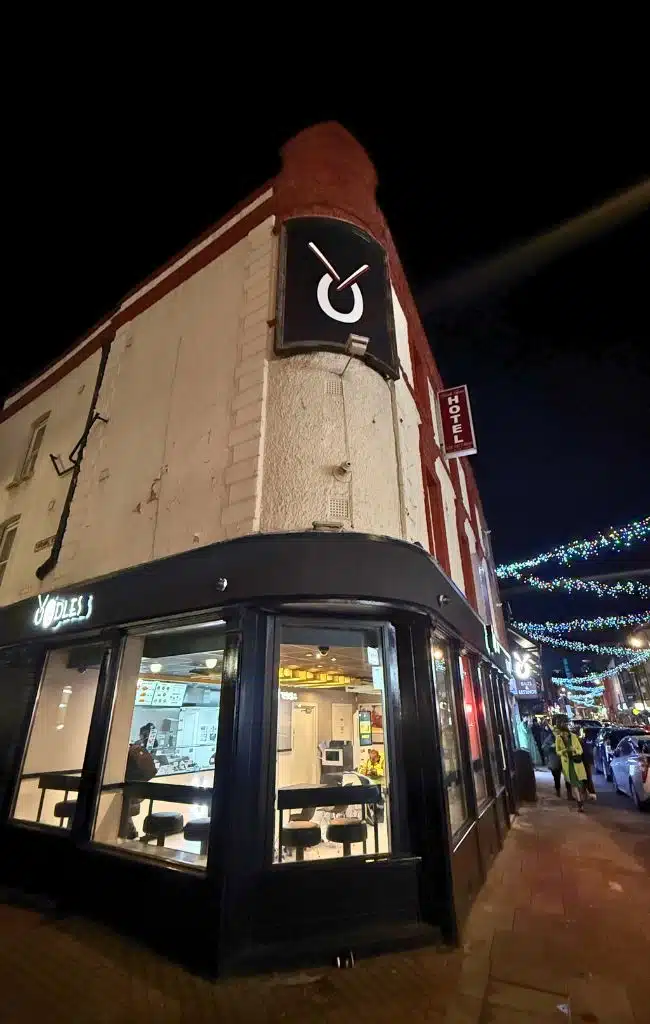
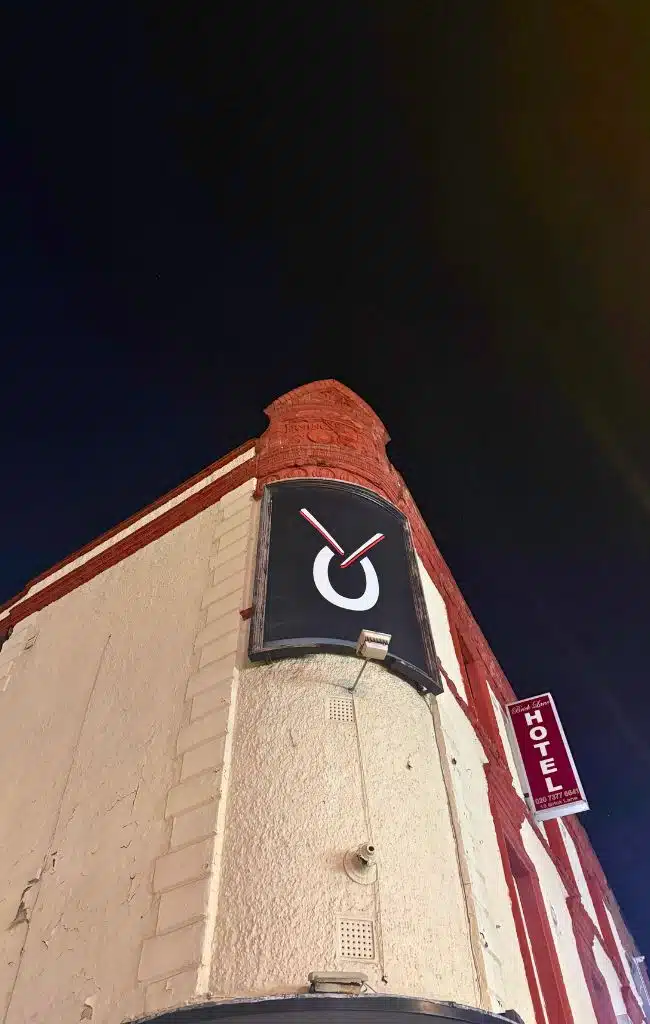
On the corner of Brick Lane stands a very modern Asian fusion restaurant. Look up, however, and you’ll see carved on old red brick facade the words Ye Frying Pan. In 1888, this was a pub and it’s where Polly Nicholas, the first victim, is said to have had her last drink before returning to her lodging house. There she was turned away because she could not afford the four pence and her body was discovered just before 4am.
Hanbury Street
A week after Polly’s death, Annie Chapman was found in the backyard of 29 Hanbury Street. Here Musa talked through the witnesses, the church bell that fixed the time, the leather apron found in the yard and the theory that the killer had some medical knowledge.
Princelet Street
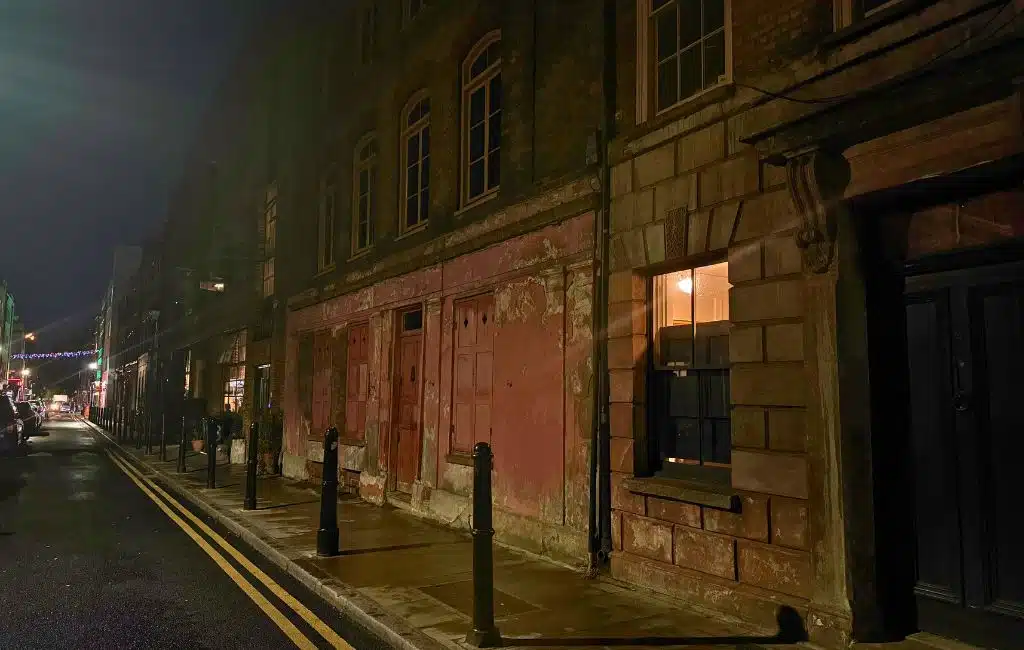
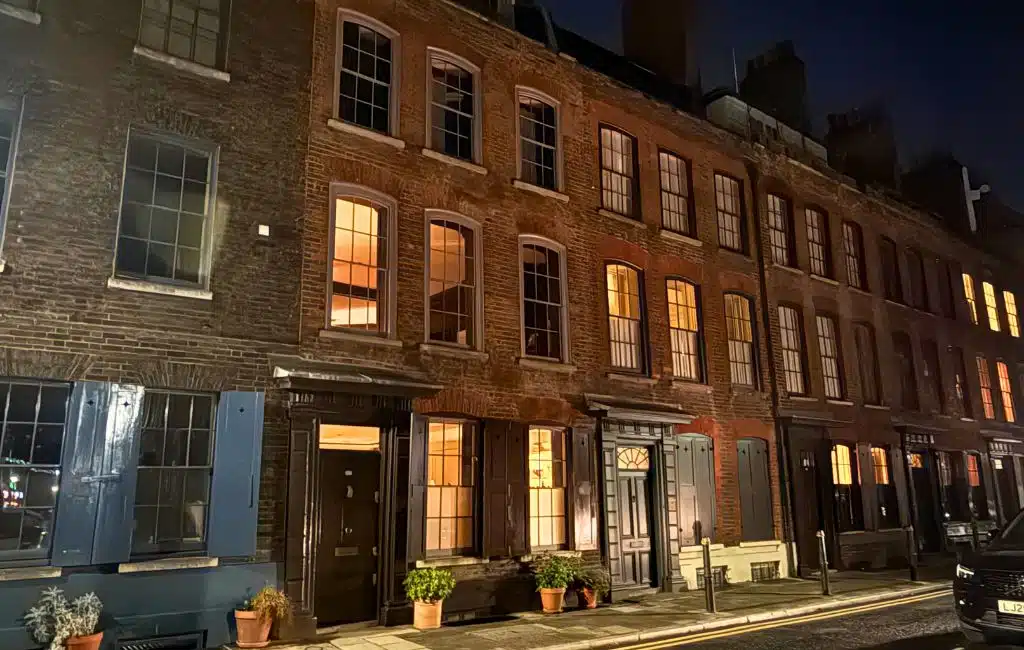
This is one of the prettiest streets on the route, lined with Georgian houses that during the Victorian era would have been tenements packed to the rafters but today are beautiful homes that sell for millions.
The street has been used as a movie location for both Peaky Blinders and Luther. Here, Musa shared stories about some of the more colourful suspects, including the American “doctor” with a collection of specimen jars.
The Ten Bells and Christ Church Spitalfields
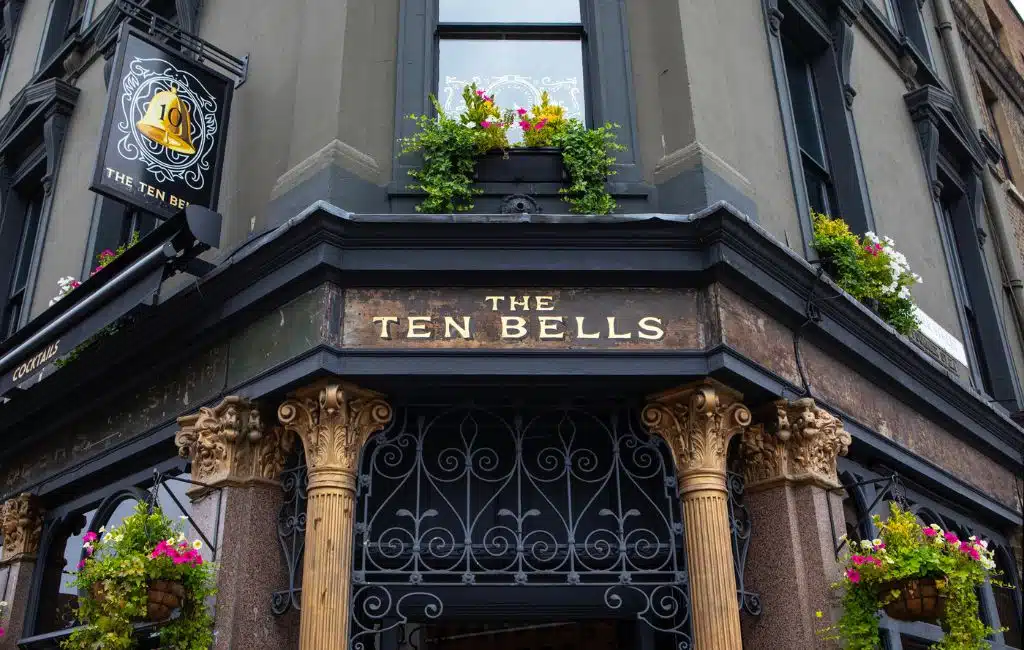
The Ten Bells pub is closely linked to Mary Jane Kelly, the final victim, who lived just around the corner. It’s still open, and it’s a great place for a drink after the tour – although be warned it is apparently haunted!
Next door is Christ Church Spitalfields, and the bells ringing in the early morning are probably the ones a witness heard chime at 5.30am on the morning Annie Chapman died.
The former Victorian women’s shelter
Outside a former Victorian women’s shelter (now student housing), Musa showed us a picture of letter received by the Central News Agency on 27 September 1888. Written in red ink and signed “Jack the Ripper”, it claimed responsibility for the Whitechapel murders.
The agency passed it to the Metropolitan Police two days later and, after the next killings, the police released parts of it to the press on 1 October. The name Jack the Ripper has been attached to the killer ever since. Whether the letter was genuine is still debated.
The City of London
The next stop was in the City of London, the original Roman Square Mile with its own Lord Mayor, its own police force and its own dragon statues. On the night of 30 September, when both Long Liz and Catherine Eddowes were killed, the killer crossed from one police force’s territory into another’s, and the two forces ended up clashing over the evidence.
This rivalry between the police forces was just one of many reasons why the police investigation was hampered. Other reasons include compromised crime scenes, hoax letters and a lack of modern forensics.
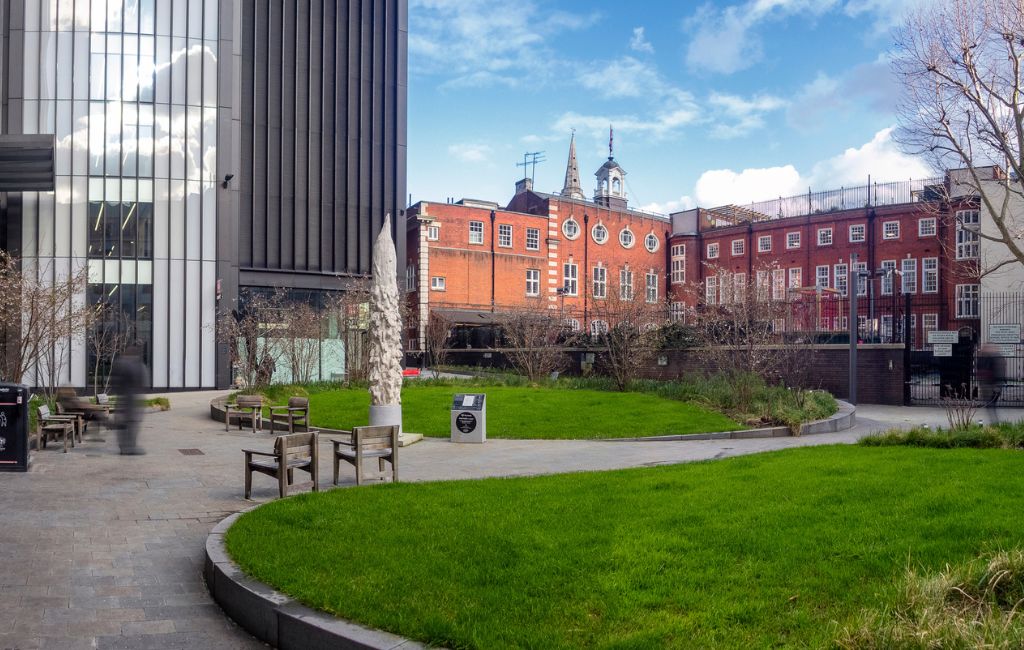
Mitre Square
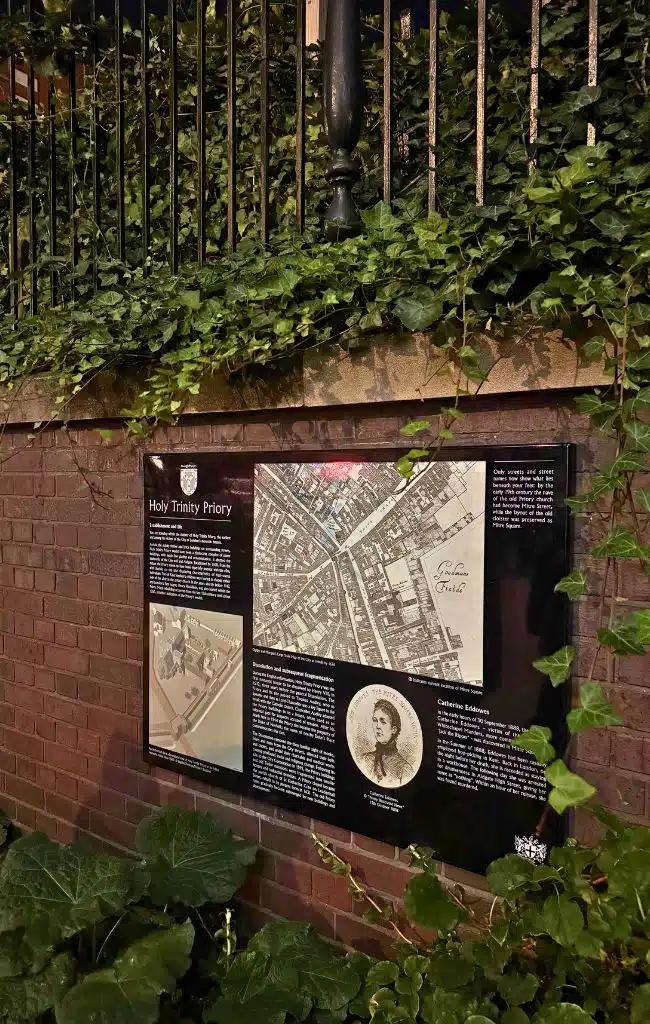
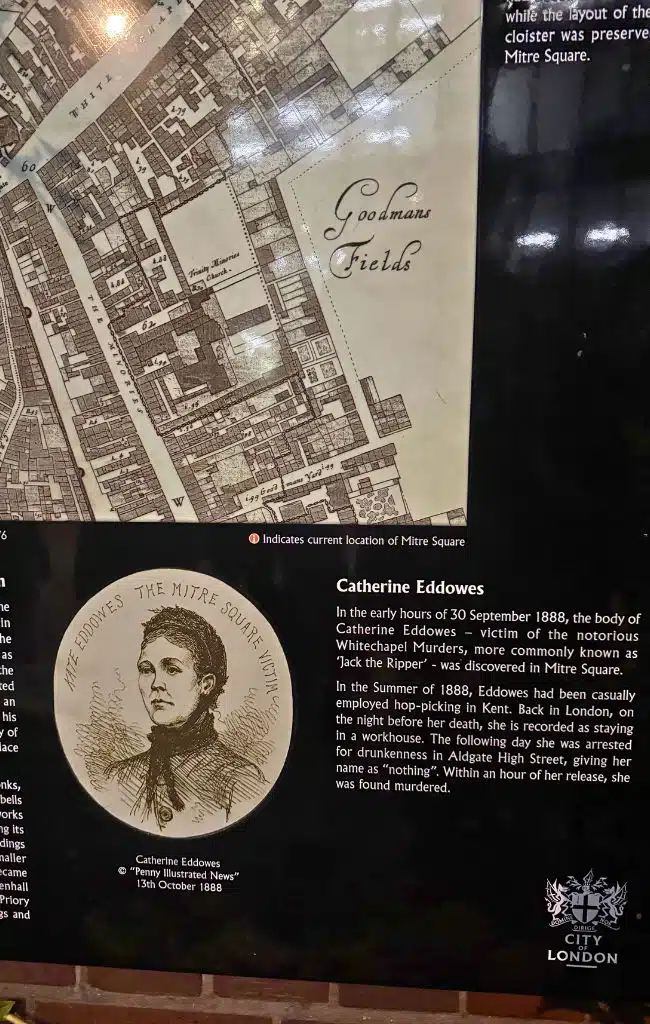
This quiet square is where the mutilated body of Catherine Eddowes was found at 1.45am, just 45 minutes after that of Elizabeth Stride. She was the fourth of ripper’s victims and a small picture and biography dedicated to her is positioned near the spot where her body was found.
Goulston Street
A piece of Catherine’s bloodstained apron was dropped in a doorway here, beneath a chalked message about “the Juwes”. The head of the Metropolitan Police, Sir Charles Warren, ordered it washed away before dawn, because he feared it would spark attacks on the Jewish stallholders of Petticoat Lane market, which still trades on nearby Wentworth Street. Destroying the evidence remains one of the most debated decisions of the case.
Dorset Street and Miller’s Court
The tour ends where the killings did. Dorset Street was once called the worst street in London, and Miller’s Court has long since gone. A modern office building now marks the spot, with three lines on the floor in its design representing the old court where Mary Jane Kelly lived and where she was murdered. Aged just 25, Mary Jane Kelly was younger than the other victims, and the only one killed indoors. Musa finishes with her story and the first crime-scene photograph taken in the UK.
Why you should book this tour
• Although I knew of Jack the Ripper, I realised while on this tour that I didn’t know that much about him or the women he killed. This tour takes you along a journey of the unsolved murders and is a fascinating look at one chapter of London’s dark history.
• The use of images brings the history to life, whether that’s copies of the letters sent to the press or sketches or photos of what the Whitechapel area looked like in Victorian times.
• It’s interactive and feels like a murder mystery with Musa regularly asking questions and getting us all involved.
• It’s so much more than a murder tour. You’ll learn about Victorian poverty, waves of immigration, policing, Freemasonry, the quirks of the City of London, and filming locations.
How to book the Jack the Ripper walking tour
You can book the Jack the Ripper tour directly with Empire Tours.
- Price: Tours are £19 per adult and £15 for 7- 12 year olds.
- When: Tours take place daily at 1pm, 5pm and 7pm.
- Meeting point: Outside Aldgate East tube station.
- Duration: 2 hours
- Private tours: These are small group tours.
- Weather: Tours take place whatever the weather!
Things to be aware of before you go
Is the Jack the Ripper tour suitable for children? It depends on the child, but this is not a tour for young kids. Please read this section before you book.
It’s graphic. The guide describes the injuries in detail and shows real mortuary and crime-scene photographs, including the notorious image of Mary Jane Kelly. On our tour Musa checked partway through that a 14-year-old in the group was comfortable continuing.
As a rough guide, I would say that this suits teens aged 14+ who are comfortable with true crime and history, rather than younger children. Be prepared for adult themes, including sex work, alcoholism and extreme poverty.