Once, while living in Mexico, we headed off for a weekend away only to have our car break down half-way through the trip. With no roadside assistance available, we ended up leaving our car at a local garage and getting a lift back home. It was an annoying – and expensive – mistake.
The truth is, most families spend more time packing snacks than they do checking whether their car is road trip ready.
It’s easy to assume that everything is fine because the car starts every morning but high speeds, variable weather conditions and the fact that cars simply have a tendency to break down when you’re far from home, means that you should spend learn how to prepare your car for a road trip before you leave home.
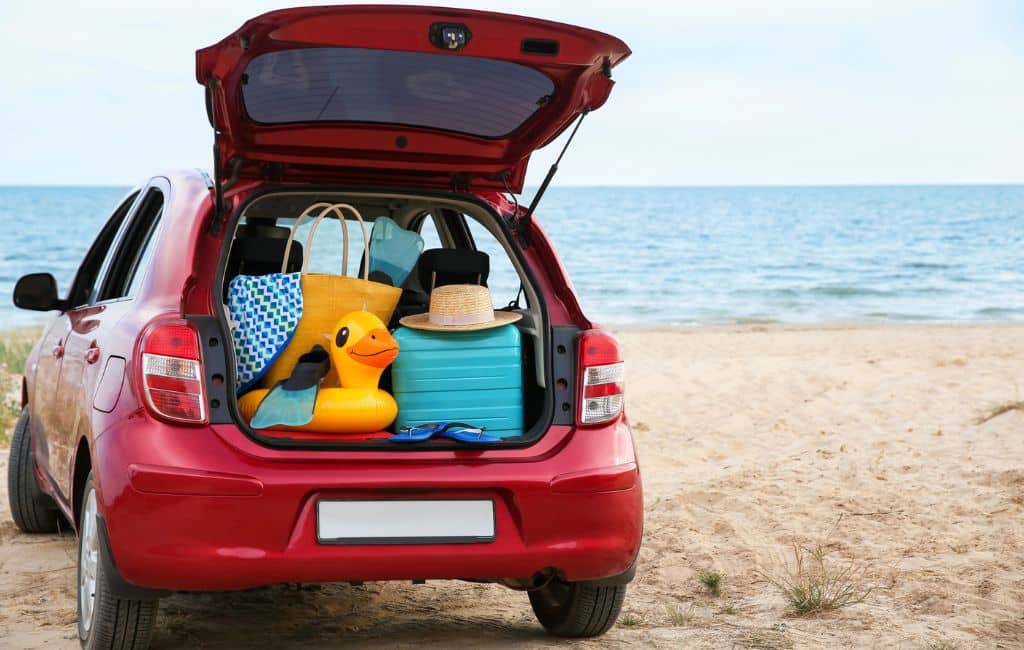
Getting your car road trip ready is not complicated, but it does require you to check specific things that most drivers overlook. Tire pressure, fluid levels, brake condition, and legal documentation all matter more on a long drive than they do on your daily commute. The best place to start, however, is with a valid MOT.
If you’re heading off on a family road trip adventure then make sure to check when the MOT is due and arrange an MOT in Essex with Elite Autocare if needed. Here are five good reasons to sort it before you go rather than after, plus other tips on how to get your car ready for a road trip.
Disclosure: This post may contain affiliate links. I have been or could be if you click on a link in this post compensated via a cash payment, gift or something else of value for writing this post. See our full disclosure policy for more details.
Check Your MOT Certificate
Your MOT certificate is not just a piece of paper. It is proof that your car meets minimum safety and emissions standards required by law. Driving without a valid MOT certificate — other than travelling directly to a pre-booked test — is illegal, and the consequences are high. In addition to a £1,000 fine if caught, your insurance may be invalidated if you’re involved in an accident (even if it wasn’t your fault), and your vehicle may be seized on the spot.
This is not what you want at the start of a family holiday.
Here is what you need to do:
- Check your expiration date: Your MOT certificate shows the exact date it expires.
- Book your test early: If your MOT is due within the next month, book it before your trip. The week before a family trip is always chaotic enough. There’s packing, there’s planning, there’s sorting out what the pets are doing and whether everyone remembered to cancel the milk. Adding a rushed MOT appointment into that mix — or discovering the certificate has already expired — is an added stress that nobody needs. Booking an MOT in Essex a few weeks before the trip rather than in the days before means you have time to fix anything that might need attention. You can take the test up to a month before it expires, and the new certificate will start from your current expiry date, not the test date.
- Review your last MOT advisories: An MOT that passes with advisories is still a passing MOT, but advisories aren’t something to ignore entirely. These are issues that were not serious enough to fail the test but could become problems under the strain of long drives – tyres approaching the wear limit, a minor suspension component showing early signs of wear, or something similar. On a normal week of local driving, an advisory might sit manageable for a while longer. On a long motorway journey with a full car, the same issue can behave very differently. Getting advisories from the last MOT looked at properly before a bigger trip means those marginal situations have been assessed with the journey in mind, rather than just the daily commute.
There’s a certain satisfaction that comes from ticking off a piece of car admin before a trip and having your MOT up to date is certainly one of them.
If you have recently had your MOT and any issues or advisories have been dealt with then you shouldn’t have to worry about the rest of this list but just in case, this is what you need to do to prepare your car for a road trip.

Inspect your Tires
Underinflated tires are one of the leading causes of punctures or blowouts on long trips. Most drivers check tire pressure once a year, if that but this is something you really should be aware of when you prepare your car for a road trip. Tire pressure drops in cold weather and rises in hot weather, and long distances at high speeds put extra strain on tires that are already in questionable condition.
Here’s what you need to check:
- Tire pressure. Check it when the tires are cold, before you start driving. The correct pressure is listed in your car manual or on a sticker inside the driver’s door. Do not go by what looks right.
- Tread depth. Use a tread depth gauge or the 20p test. Insert a 20p coin into the tread grooves. If you can see the outer band of the coin, your tread is below the legal limit and you need new tires.
- Tire condition. Look for cracks, bulges, or uneven wear. Any of these mean the tire could fail under the stress of long drives.
- Spare tire. Check that you actually have one, that it is inflated, and that you know how to change a flat tire. Many cars now come with repair kits instead of spares, so know what you have.
If your tires are more than five years old or close to the legal tread limit, replace them before the trip. A flat tire in remote areas is not just inconvenient, it is dangerous.

Check all Fluid Levels
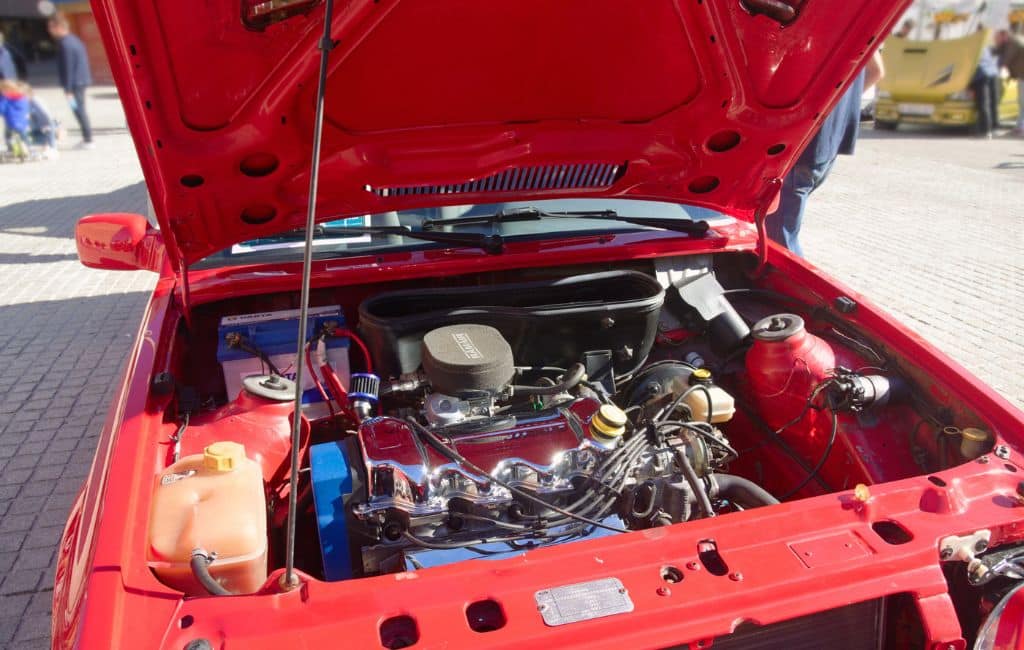
If you’re wondering how to prepare your car for a road trip then make sure to check your car’s fluid levels. Fluids keep your car running smoothly, and long road trips expose any deficiencies fast: low engine oil can cause your engine to overheat, low brake fluid can reduce braking power, and low coolant can lead to engine failure in hot weather.
Here is what to check:
- Engine oil: Check the oil level using the dipstick. If it is low, top it off with the correct grade of oil. If it has been a while since your last oil change, get one before the trip.
- Coolant level: Overheating is one of the most common causes of breakdowns on long drives. Make sure to check the coolant reservoir when the engine is cold and top it off if needed.
- Brake fluid: Low brake fluid can indicate worn brake pads or a leak in the brake system. If the level is low, get it checked by a professional.
- Windshield washer fluid: Long drives mean bugs, dirt, and road grime. Make sure your washer fluid is full so you can keep your windshield clear.
- Transmission fluid: If your car has a dipstick for transmission fluid, check the level. Low transmission fluid can cause problems with the gearbox.

Test your Lights, Wipers, and Air Conditioning
Small issues with lights, wipers, or air conditioning can be annoying on the school run or daily commute but on a long road trip they can become serious safety problems.
Before you leave:
- Test all lights: Check headlights, brake lights, indicators and hazard lights, and replace any necessary bulbs.
- Check your windshield wipers: If they are not working properly, replace them. You do not want to be caught in the rain with wipers that do not work.
- Test your air conditioner: Turn it on full blast and make sure it blows cold air. A broken air conditioner in hot weather can make a family road trip extremely uncomfortable.
These checks take ten minutes and can save you from serious trouble on the road.
Pack an Emergency Kit
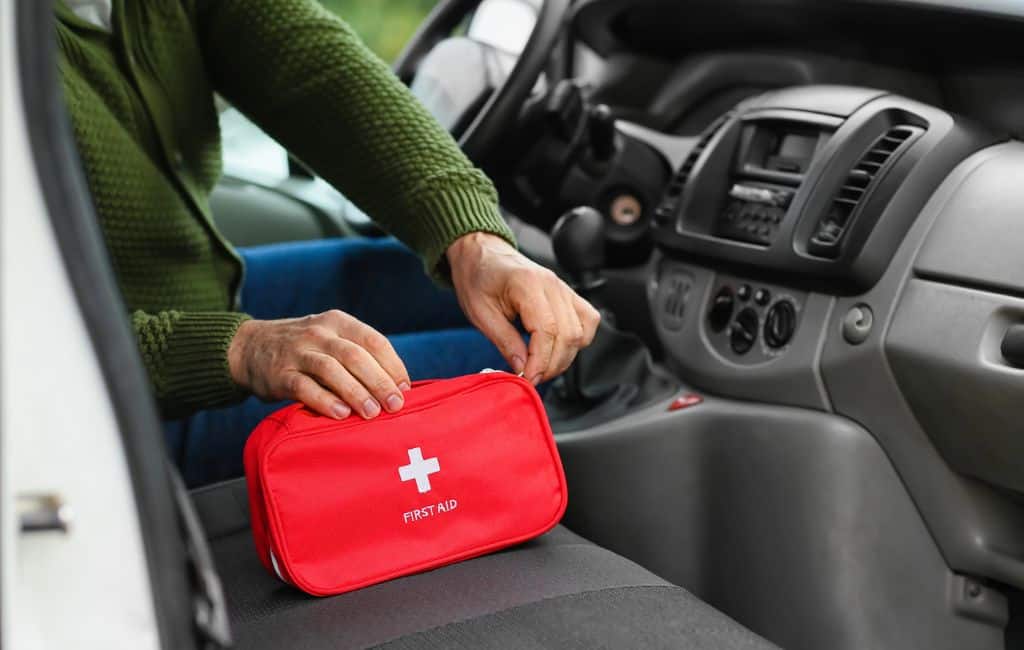
Even with perfect preparation, car trouble can happen. Having an emergency kit and some basic tools means you can handle small problems without waiting hours for help. If travelling in France, for example, you are legally required to carry a reflective high-visibility vest (kept within reach in the cabin, not the boot) and a warning triangle. You can be fined if you don’t have either.
What to pack:
- First aid kit: Include bandages, antiseptic wipes, pain relief, and any prescription medications your family needs.
- Jump leads: A dead battery is one of the most common breakdowns. Jump leads can help you get back on the road.
- Basic tools: A screwdriver, wrench set, and duct tape can fix minor issues on the spot.
- Flashlight and batteries: If you break down at night, you need to see what you are doing.
- Reflective triangle or hazard sign: This warns other drivers if you are stopped on the side of the road.
- Bottled water and snacks: If you are stuck waiting for help, you’ll want to keep hydrated and fed – especially if you have kids in the car!
Photos courtesy of Depositphotos