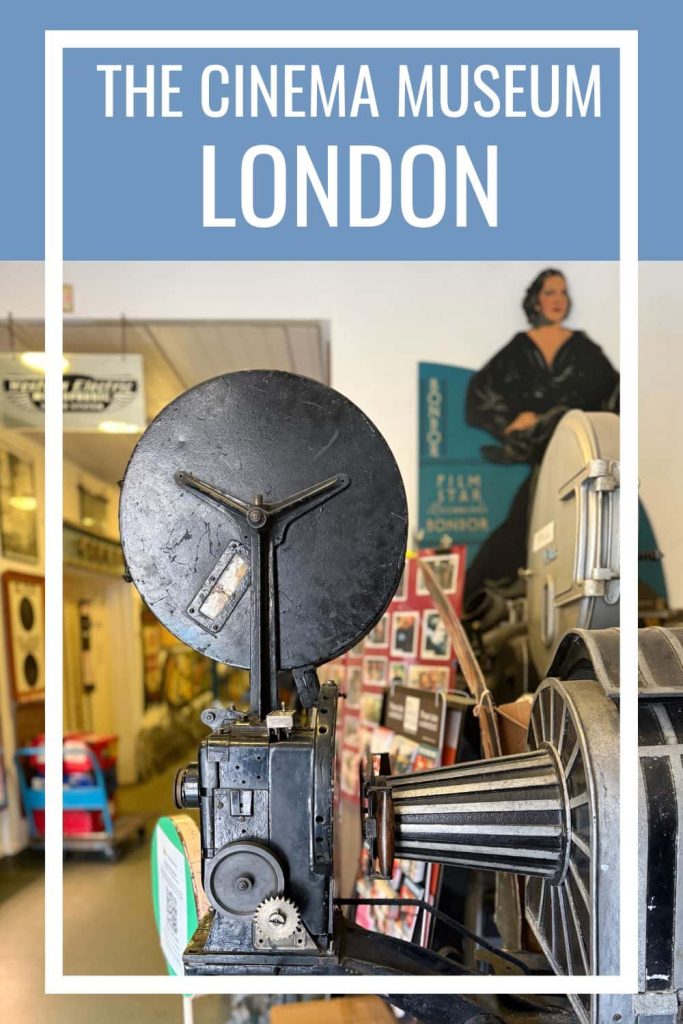
Located near Elephant & Castle in a former Lambeth workhouse is the excellent Cinema Museum, London.
This is one of the city’s more unusual museums but also, I think, one of the best. Even if you only have a passing interest in the history of cinema, or you’re simply looking for something different to do, then you should definitely put this hidden gem on your itinerary.
After having the museum on my London wish list for a very long time I finally managed to visit and it’s now one of my favourite museums in London.
Here’s everything you need to know about visiting this most unique of London museums.
What is the London Cinema Museum?
The Cinema Museum is London’s only museum dedicated to the experience of going to the cinema. It focuses in particular on the Golden Age of Cinema, the period time from the end of the 1920s up until the late 1950s.
It was founded in 1984 by Martin Humphries and Ronald Grant, two cinephiles and collectors. Ronald had worked in the cinema industry from the age of 15, training as a professional projectionist. Not long after, he started collecting film memorabilia. When the two men met, they continued to grow their own private collection of cinema history before eventually deciding to create a museum that celebrates the spirit of cinema.
The museum was originally held in Raleigh Hall in Brixton before eventually making its home in here.
Visiting the London Cinema Museum
One of the reasons it took me so long to get to the Cinema Museum is because you can only visit on a guided tour. The two-hour long tours are conducted by volunteers and typically take place on Saturdays.
Having finally managed to get a ticket, I arrived for one of the Saturday morning tours where I met guides Rowan and Nicola outside the former workhouse. After a brief introduction to the museum the tour started with a history of the historic building.
Built in 1873, this was the former home of the Master of the workhouse. Back in the day there would have been additional wings – separated into male and female and subdivided by good character and bad character – but the master’s house is what’s left.
A workhouse, for those who don’t know, was a state-run institution popular during Victorian times that provided shelter for people who had no means to support themselves. In return, the “inmates” as they were called, were forced to work for free. The fact that they were called inmates gives you an idea of what workhouses were really like.
Interestingly, this workhouse was once home to a young Charlie Chaplin who grew up nearby and spent two periods of his life living here with his brother and mother.
Tours of the Cinema Museum
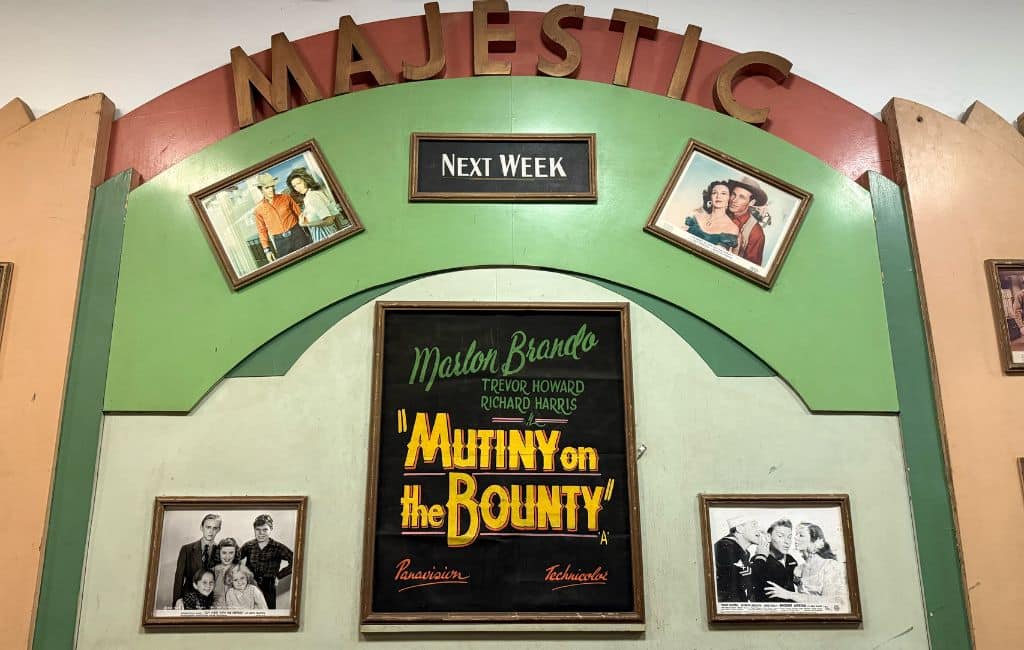
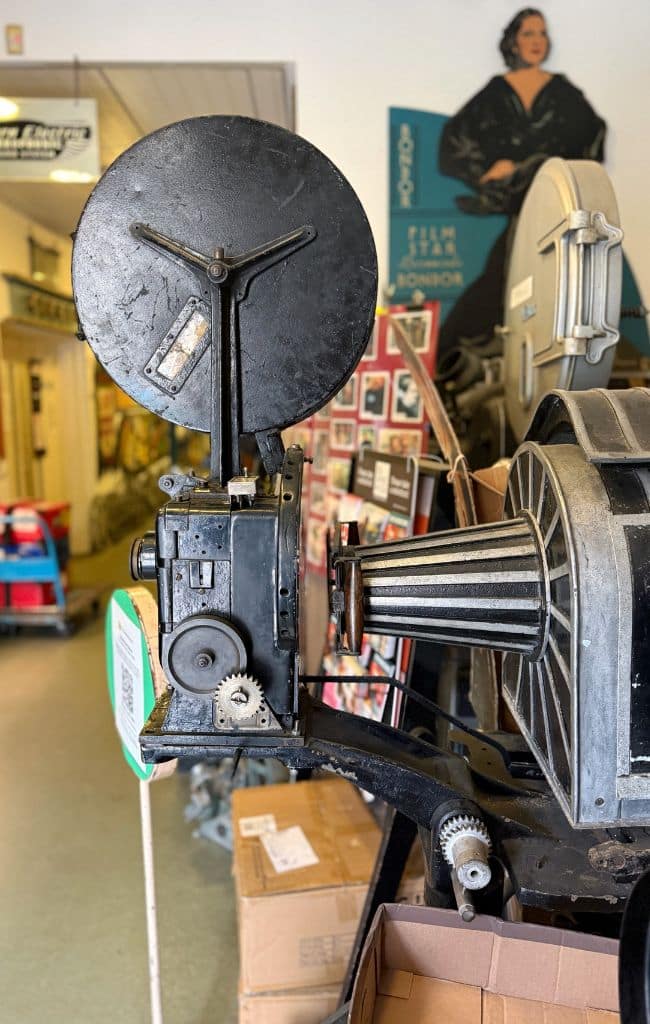
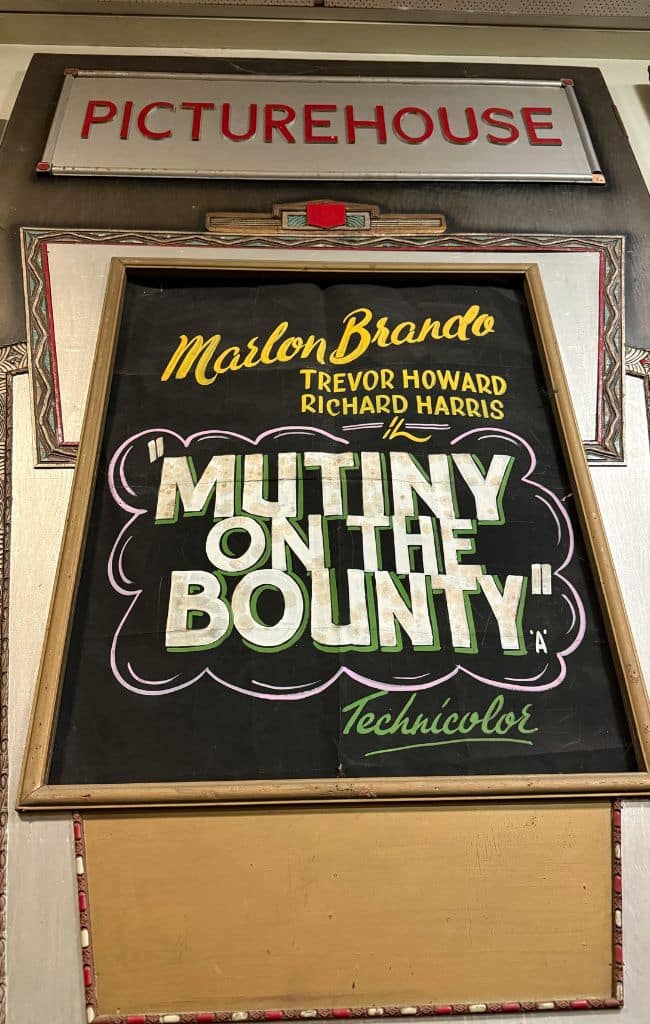
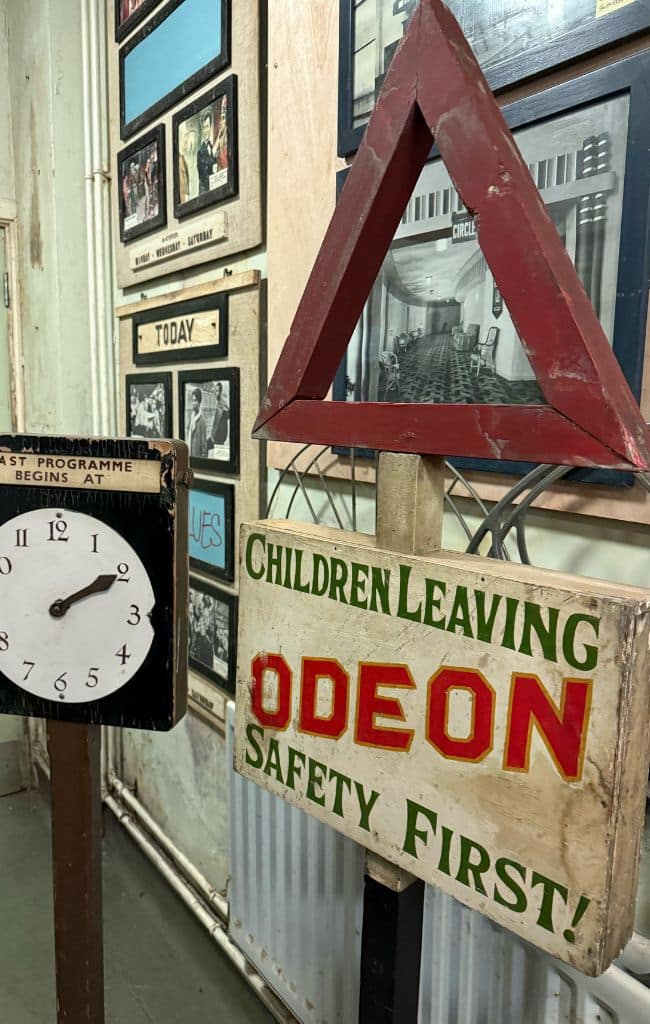
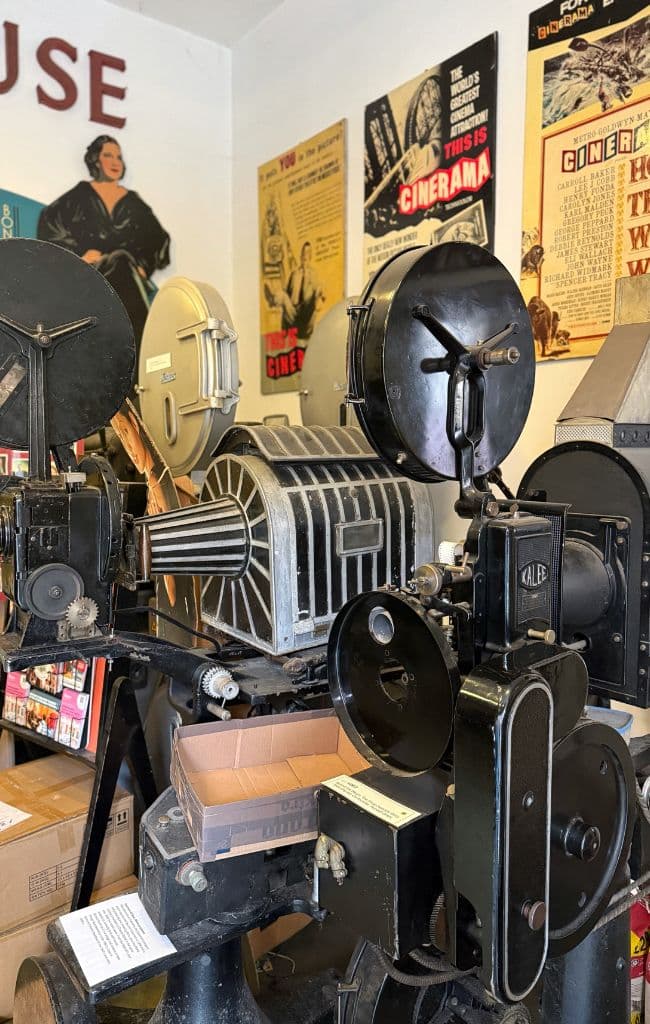
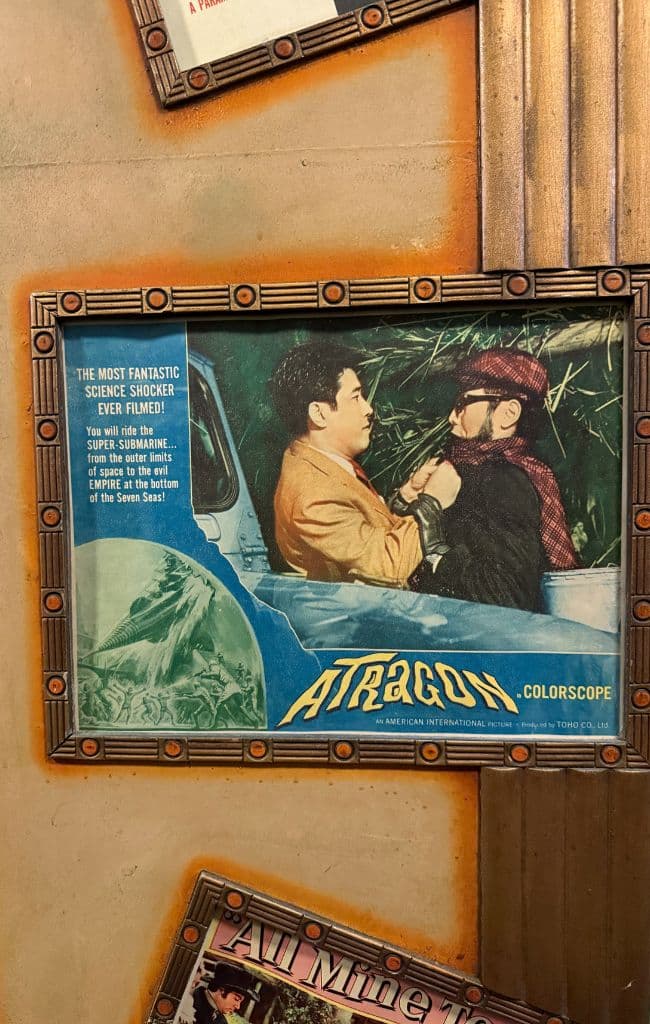
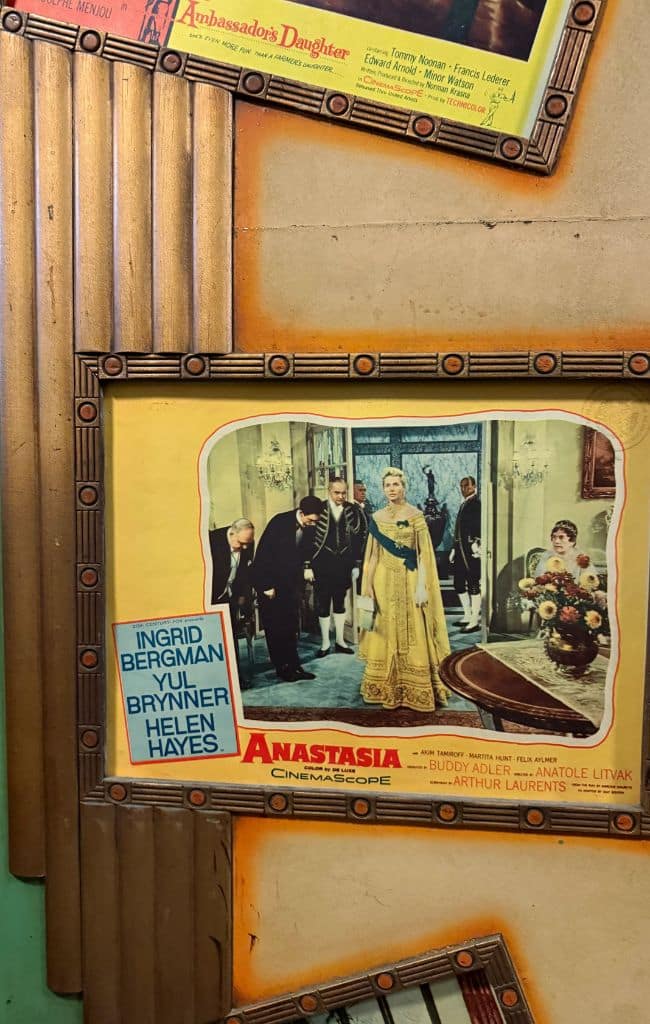
Inside, the Cinema Museum is bursting at the seams with movie posters, promotional materials, art deco cinema chairs, vintage projectors, memorabilia and more. There’s so much to see that our tour felt a little crowded as we all stood in the entrance hall to hear Rowan talk but the somewhat haphazard displays only add to the museum’s charm.
I don’t want to give too much away as the volunteers do an excellent job of bringing the cinema experience to life. However, the tour is loosely made up of a handful of stops that each focus on different aspects of the cinema experience.
During the first stop, Rowan gave us a brief history of the moving image and the reasons why, in the 1920s, there was a sudden boom in cinemas. Apparently, in the area around Elephant &Castle alone, there was at one point 42 local picture houses.
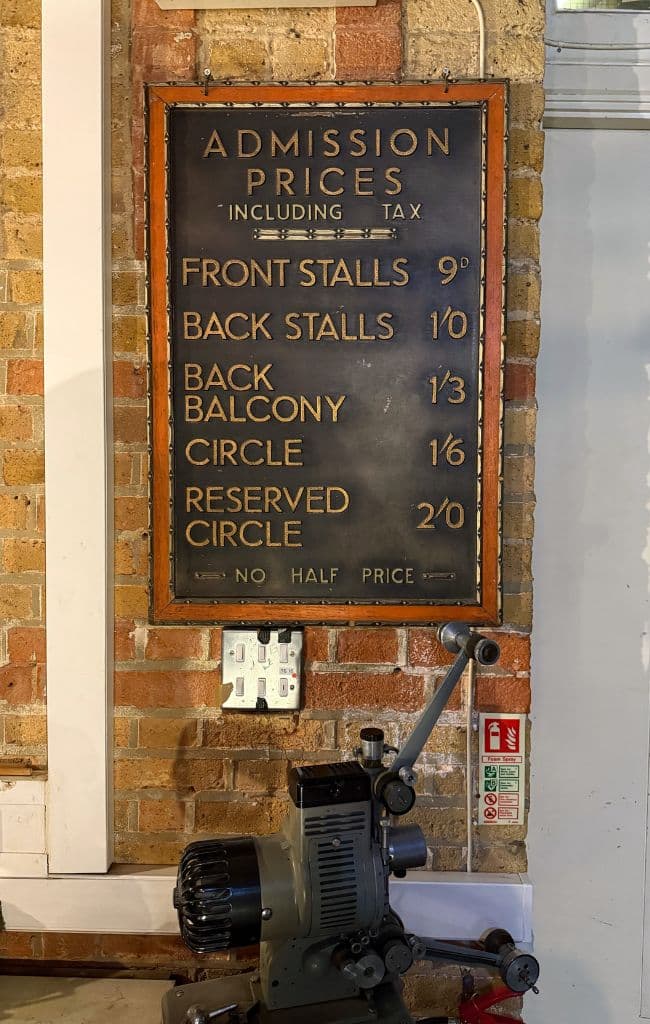
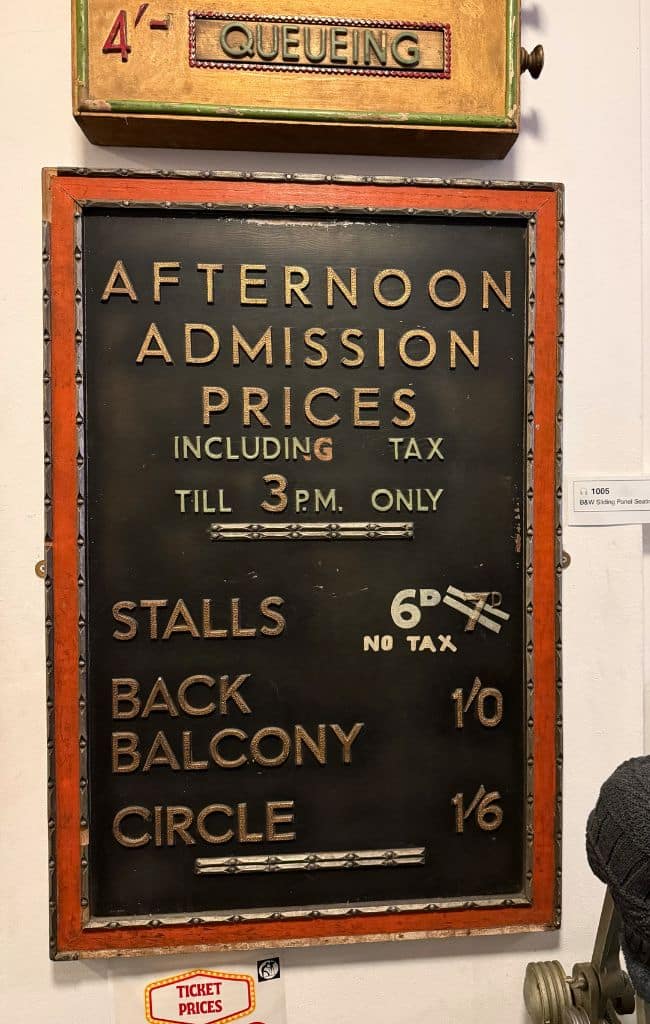
We then moved on to what it was really like to go to the cinema during the golden age. Rowan covered topics including ticket pricing and why tickets were once priced according to seats and not on the films showing. Until a certain Alfred Hitchcock came along, film times were merely a suggestion and people turned up whenever they wanted, often sitting through multiple films before eventually leaving.
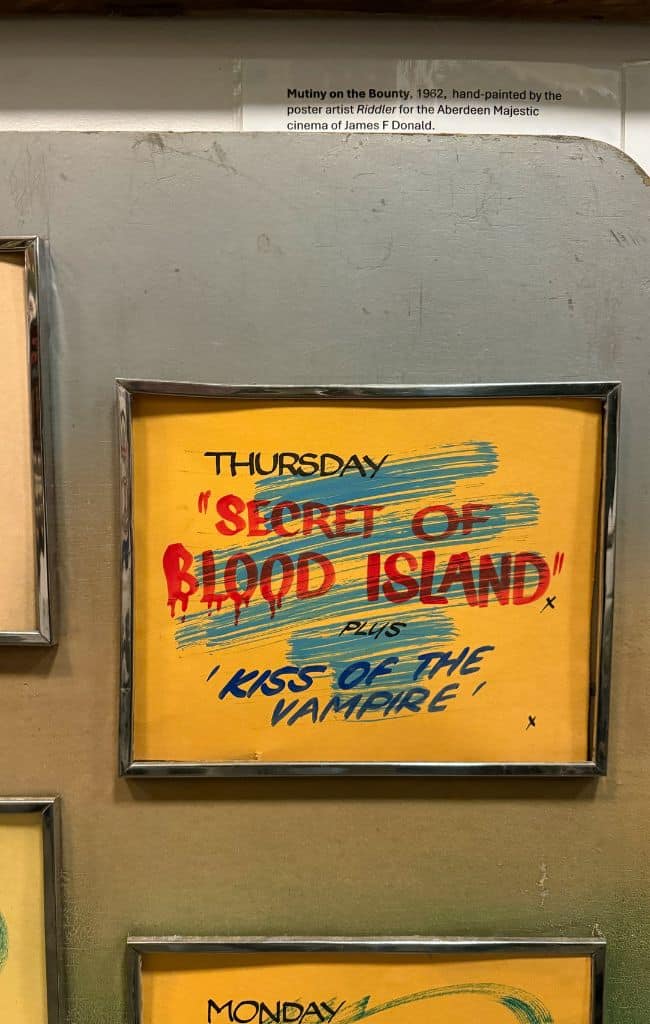
Our next stop explored the history of film classification including how the 1931 film, Frankensteinin, introduced a whole new age rating: “H” for horrific.
From there we moved on to Saturday morning cartoon clubs – something that my parents remember – when children were dropped off at the cinema for several hours of watching westerns, cartoons and short films.
There are also artefacts relating to cinema ushers, with old ticket reels and torches on display, as well as a canister that once held scented spray, which was used to try and make the cinema smell better. At one point, Rowan hands out strips of film to each of us to explain how sound technology had developed.
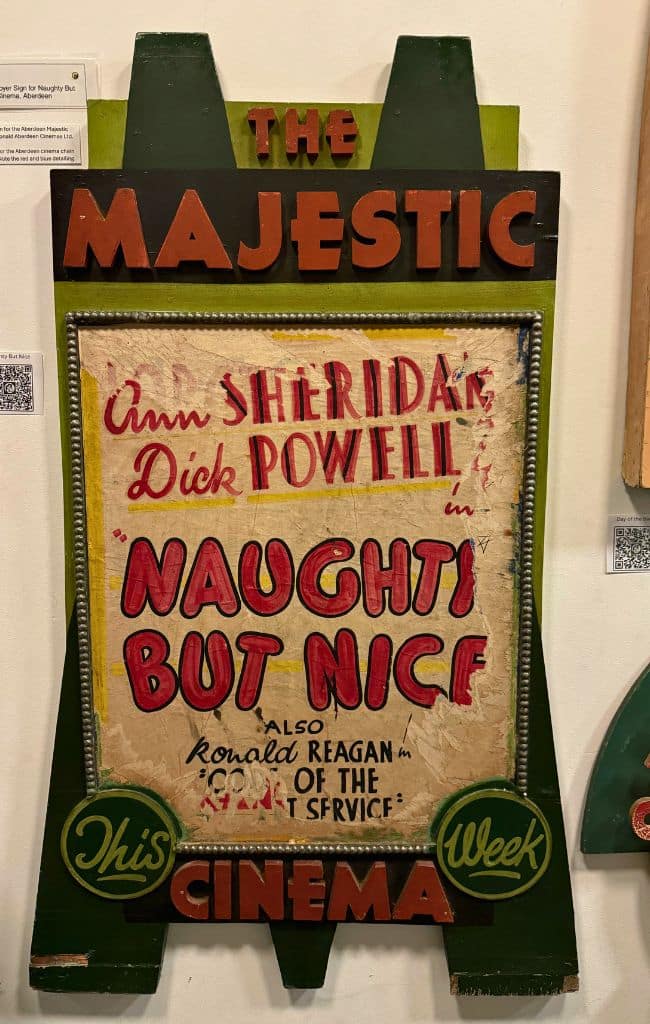
Throughout the ground floor is an extraordinary collection of cinema souvenirs including wooden boards showing the price of cinema seats, hand-painted film adverts, ushers’ uniforms, photographs, old popcorn cartons, posters and more. It’s a mind-boggling and totally unique collection of artefacts.
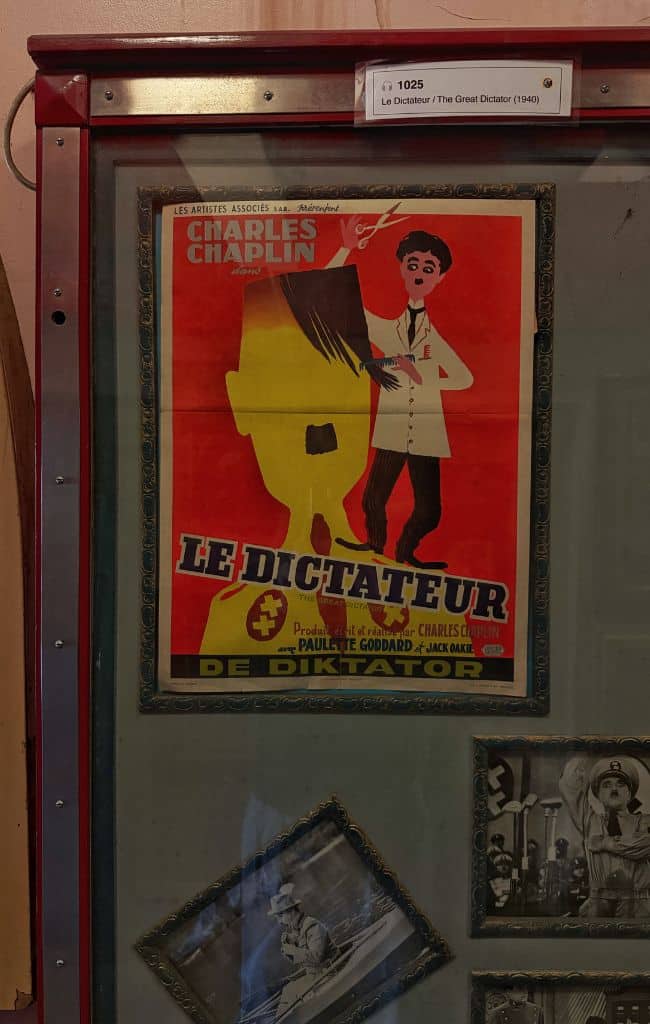
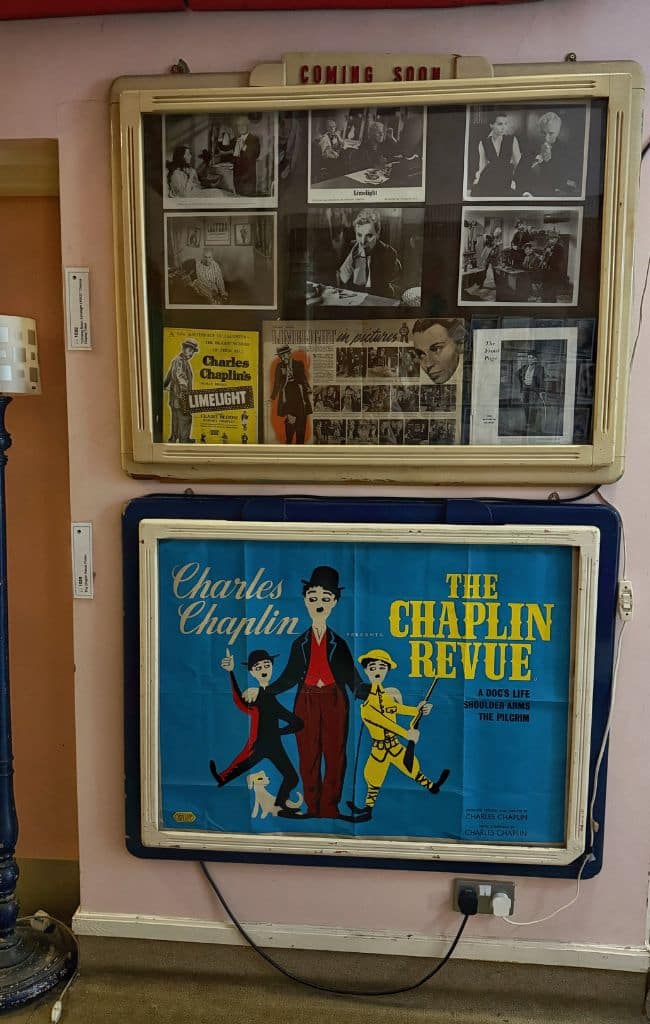
Heading upstairs, past a number of old movie posters, is a section dedicated to Charlie Chaplin with lots of film posters, including many from overseas. As Rowan explains, because Charlie Chaplin’s films were silent – and also because of the physical comedy – they were easy to export to different countries, which made him one of the first global superstars.
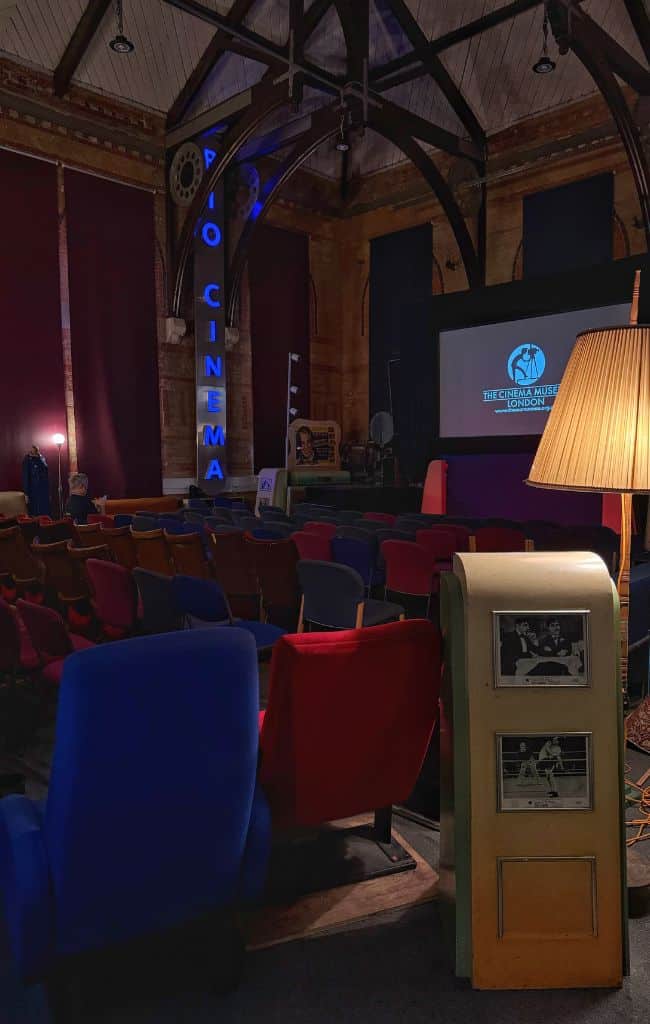
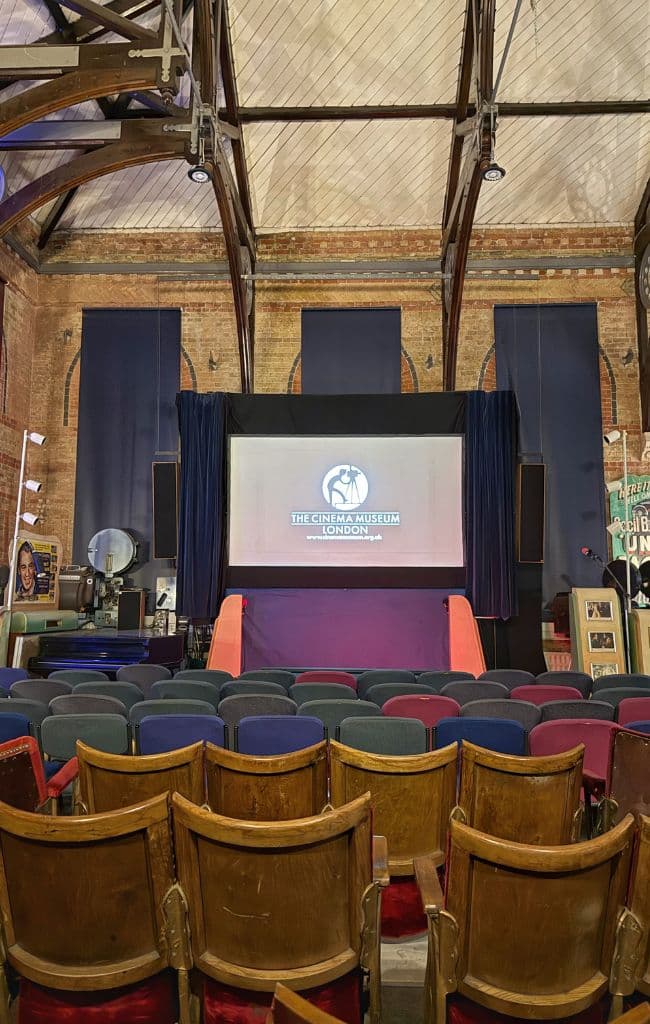
The final part of the tour takes place in what was once the workhouse chapel and which today houses a café, a small shop and a large screen where the museum hosts regular film screenings.
As part of the tour, you’re given complimentary tea or coffee and a biscuit, followed by a thirty-minute screening from the museum’s archives. We sat down and watched a collection of film snippets including one from a Charlie Chaplin film, one from aLaurel and Hardy film and a Tom & Jerry cartoon.
The Museum also contains a library with over 10,000 books relating to film and cinema and hosts regular screenings – you can see upcoming events here.
All in all the tour takes around two hours and really it’s a must for film lovers and film enthusiasts. I loved my visit, and it made me quite nostalgic for a time before streaming services and content at the click of a button!
The Cinema Museum essentials
The museum is located at the back of Elephant & Castle in south London. The nearest tube stations are Kennington or Elephant & Castle. It’s about a 10-minute walk to the museum from both stations, and the walk is well signposted.
Tours typically take place on Saturdays with a morning tour and an afternoon tour offered. Ticket prices are £15 for adults and £12 for students, young people under the age of 18 and people over the age of 65.
You do need to book your tour in advance and you can do that here. If you’re interested in attending one of the film screenings held at the Cinema Museum then you can book these here. These screenings range from silent films, accompanied by a pianist and cult classics to modern day indie favourites.