
If you’re planning a road trip across Europe this summer but are confused about how the tolls work on the continent then you need to use Tollhopper.
Tollhopper is a website and app that makes driving in Europe easy by helping you navigate toll roads, calculate route costs and buy digital highway vignettes.
So, as you start planning your summer road trip, here’s how you can make your European road trip easier and more enjoyable.
Disclosure: This post may contain affiliate links. I have been or could be if you click on a link in this post compensated via a cash payment, gift or something else of value for writing this post. See our full disclosure policy for more details.
How to plan a European road trip: all about tolls and vignettes
Table of Contents
One of the best things about driving in Europe is how easy it is to get around. No sooner do you arrive in France, whether by the Eurotunnel or ferry into Calais, then you have the entire continent to explore.
The motorways are smooth, well-signed and often in considerable better shape – with significantly less traffic – than those in the United Kingdom. The only genuine adjustment is remember to drive on the right. Well, that, and getting used to European rules around toll roads and vignettes.
Many European countries require payment to use the motorways, while others have introduced Low Emissions zones (LEZ) and Clean Air Zones (CAZ) in an effort to improve air quality (although these tend to be mostly in city centres, some bypasses and ring roads are included).
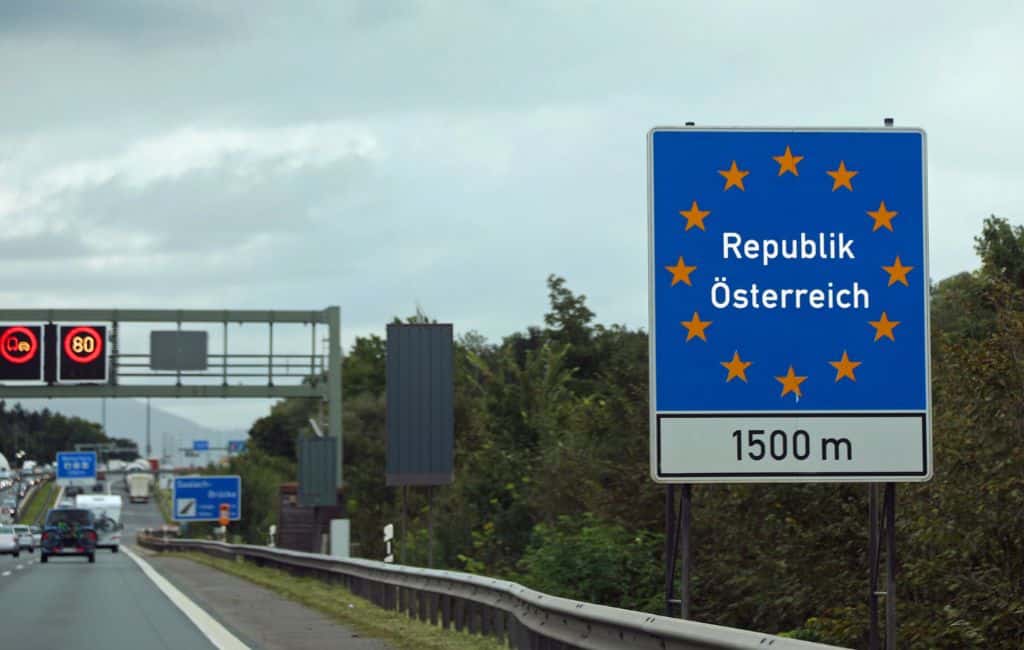
Each country also has different payment methods for using the highways: France uses toll booths, Germany charges trucks but not cars, Switzerland needs a motorway vignette to use the major highways and expressways, and Austria requires cars to have an Austria e-vignette.
We regularly drive in Europe, typically driving from London to the French Alps for both skiing trips and for the summer holidays so I’m very comfortable driving in France. Planning a long trip that includes multiple border crossings, however, can feel a lot more complicated. Which is why we’ve started trying Tollhopper and it is definitely making our European travel easier.
An example of one driving route from the UK to Austria
What is Tollhopper?
Available as both a website and an app, Tollhopper makes planning a trip from the UK to Austria incredibly easy. Simply enter your destination, vehicle type, and travel dates into the route planner and Tollhopper will immediately identify exactly which tolls and vignettes you need, and you can buy them digitally in minutes.
What this means in practice is that you’ll have everything sorted before you leave – no hunting for rest stops with the right payment kiosk, no keeping track of paper receipts in foreign languages and no surprise fines once you’re home from the holidays because you didn’t purchase the right digital permits.
The entire process takes less than 10 minutes, and your electronic vignettes arrive via email. When you’re on the road, number plate recognition systems read your registration automatically at borders and checkpoints without the need for a physical sticker.
This means you can drive through border crossings without stopping and you’ll be fully compliant whichever one of the vignette countries that you have bought an e-vignette for.
Tollhopper currently offer digital vignettes for countries including Austria, Hungary, Slovenia, Switzerland, Czech Republic, Romania, Slovakia and Bulgaria, with various options available for each country.
- Austria’s digital vignette is available for 10 days, 2 months, or a full year depending on your trip length.
- Slovenia’s digital vignette system is available as a 7 day vignette, a one month vignette and a 12 month vignette.
- The Czech Republic has digital vignettes valid for one day, 10 days, 30 days or one year.
- Romania has options for a 1-day, 10-day, 30-days, 60-day or annual vignette, all available via Tollhopper.
- There are options for a 1-day, 10-day, 30-day or annual e-vignette for Slovakia.
- In Bulgaria digital vignettes are available for weekend visitors as well as those valid for 7 days, one month, three months, and annual vignettes.

Route options driving from the UK to Austria
Driving from London to Austria covers around 1,200 miles depending on which route you choose to take as well your end destination in Austria. The following are some of the most popular options:
Route 1: A speedy route through France and Germany
Calais – Reims – Strasbourg – Munich
This speedy route sticks to major motorways the entire way. You’ll have to pay barrier tolls in France, Germany is toll-free for cars and Austria requires the digital vignette the moment you cross the border near Salzburg.
For toll roads in countries such as France, Tollhopper have a handy electronic toll box device available to purchase that you stick on to your windscreen, which allows you to zip through the designated lane without having to pay the toll manually. This is a real time saver if you’re travelling during school holidays or in peak season when the queues at toll booths can be long.
Route 2: A scenic route Through Switzerland
Calais – Basel – Zurich – Innsbruck.
For a more scenic route, head to Austria via Switzerland. Driving through Switzerland requires a motorway vignette, which costs CHF 40 and is valid from 1 December of the year prior to that shown on the vignette through to 31 January of the year following that on the vignette.
In other words if you travel in December 2026 and want to drive through Switzerland again in February 2027, you will need to buy a new vignette.
Checkpoints scan plates automatically and if you’re caught without a vignette you will be fined CHF 200 and you will have to buy a vignette there and then.
Route 3: A shortcut through Belgium
Traveling via Belgium will cut an hour or so from your road trip and, the good news is, that travelling on Belgium’s motorways are completely free for cars (lorries / trucks have to pay).
The only place where you will have to pay a fee is for using the Liefkenshoek Tunnel near Antwerp. Costs vary based on vehicle size and payment method – it’s more expensive to pay in cash than it is to pay electronically for example.
Austria’s electronic vignette system – how it works
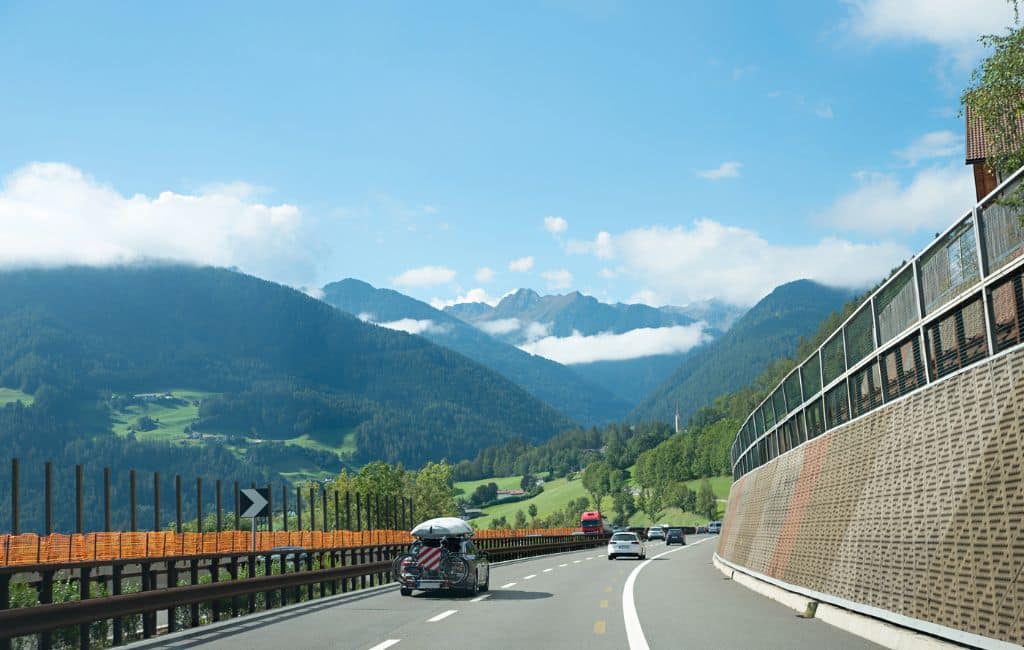
Prior to 2024, Austria used physical vignette stickers but now the system is fully digitalised.
Once you’ve purchased your digital vignette via Tollhopper, it links directly to your license plate number so you don’t need to display anything on your windscreen. Cameras positioned on every motorway entry point scan your number plate and cross-reference it against Austria’s central vignette database in real time. If your plate isn’t registered, the system flags you and issues an automatic fine.
You can buy the vignette directly through Tollhopper as part of your bundled toll package. The vignette comes in three durations:
- 1-day vignette: 9.60 euros, valid for one day
- 10-day vignette: 12.80 euros, valid for 10 consecutive days
- 2-month vignette: 32 euros, perfect for extended trips or multiple visits
- Annual vignette: 106.80 euros, valid from December 1st of the previous year through January 31st of the following year

France’s péage system – how it works
France operates a pay-as-you-go distance-based tolls system rather than a vignette. This means that you pay at toll booths, known as péages, with costs calculated by distance and your vehicle class.
For example, a family car with a roof box counts as Class 2, which costs more than a standard Class 1 car. If you’re towing a caravan then this is counted as a Class 3 vehicle and is more expensive again.
Although very easy to use – you can pay by cash, credit card or contactless at the toll booths, or buy a toll box from Tollhopper – costs can add up really quickly. If you are driving between the UK and Austria via France, be aware that this may well be the most expensive leg of your journey.
Germany’s toll situation – cars vs trucks
The good news for families driving via Germany is that there are no toll charges for passenger vehicles here, the only vehicles that need to pay are heavy goods vehicles over 7.5 tons.
There is one exception, however, are some Alpine routes where some specific mountain passes charge all vehicle types. These are clearly marked with toll stations, and you pay on-site. They’re rare and usually avoidable if you stick to main motorway routes through Germany.
Switzerland’s vignette system
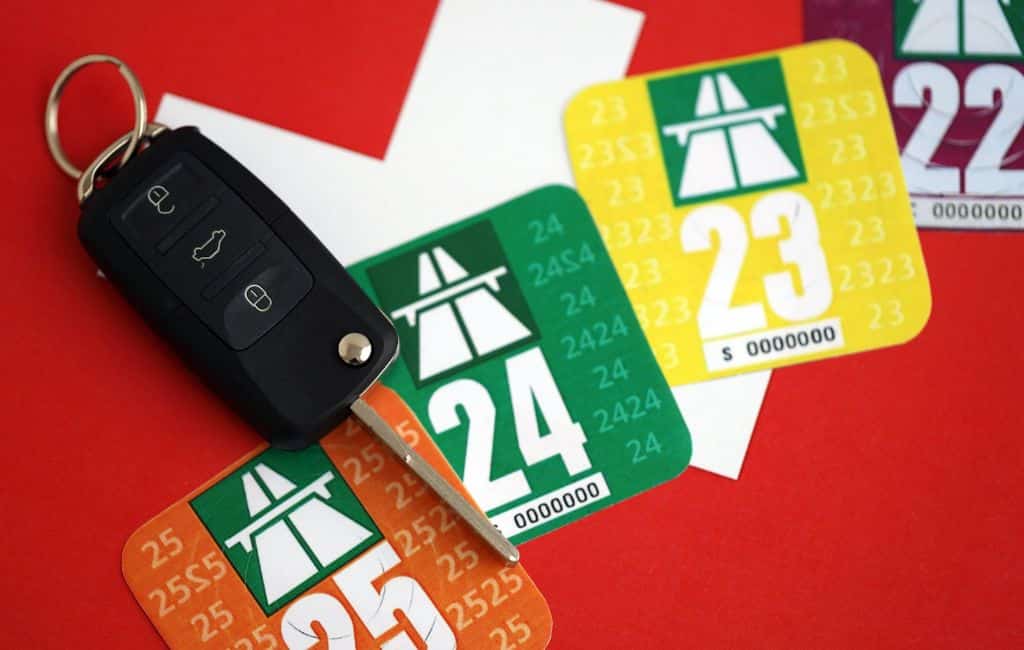
If you plan to drive on Swiss motorways then you must purchase a vignette. This is true even if you are only transiting through Switzerland on your way to Austria. An annual vignette costs 40 CHF and is valid from December 1st of the previous year through January 31st of the following year.
You can buy the vignette at the border, but queues at peak travel times can stretch for 30 minutes or longer. Buying ahead through Tollhopper registers your plate digitally and emails your confirmation immediately meaning you can skip the queues entirely.
Belgium’s Liefkenshoek Tunnel
Belgium’s toll system is refreshingly minimal compared to its neighbuors, but the Liefkenshoek Tunnel near Antwerp is one area that regularly confuses drivers.
The tunnel is part of the Antwerp Ring Road, and it’s the fastest route if you’re driving from Calais towards Germany. It’s also one of the few major roads in Belgium that requires drivers to pay to use it.
What’s confusing is that there’s no barrier or payment booth. Instead, tolls are collected via automatic licence plate recognition and you have to remember to go online to pay the toll (for any UK readers, this is really similar to the Blackwall Tunnel charge that always catches me out!).
You have until midnight the following day to pay the toll online and if you miss the payment window, you have to pay a fine. Most British families have no idea this tunnel even charges a toll until they receive a penalty notice weeks later. The signage is subtle, and if you don’t read Dutch or French, it’s easy to drive through without realising that there’s a toll to pay.
What happens if you don’t pay for a toll or vignette?
In short, if you don’t pay the motorway tolls or have your official vignette, it could end up being a very expensive road trip for you!
Austria’s penalty for driving without a valid vignette starts at 120 euros if you’re caught during a roadside check. If the violation is detected via camera and processed after the fact, the fine can climb to 240 euros plus administrative fees. You’ll also receive a demand for the cost of the vignette itself.
Switzerland’s fine is 200 CHF on the spot, and Swiss border police are known for checking vignettes aggressively during peak travel months (for example if you’re crossing from Geneva into France for a ski holiday). If you can’t show proof of a valid vignette, they won’t let you proceed until you buy one.
Belgium’s Liefkenshoek Tunnel fine escalates depending on how long you wait to pay. And don’t think you can avoid paying because you live in the UK, fine notices will be sent to the registered address of your UK number plate.
France’s péage barriers are harder to evade because you physically can’t exit the motorway without paying.
How to use Tollhopper to plan your road trip
Setting up toll coverage through Tollhopper is very easy. Enter your route details into their toll calculator, including your departure date and return date, and the countries you’ll drive through and Tollhopper will get to work.
The system recognises common routes and tells you which countries you’ll need to purchase digital vignettes for. Add your car details, including licence plate number and vehicle type, and then review the total cost of the trip – Tollhopper breaks down each fee by country and explains what it covers.
Once you’ve completed your payment, you’ll receive a confirmation email with all the details of your vignettes. I would recommend saving this to your phone and printing a backup copy to keep in the car just in case.
All that’s now left to do is to pack your suitcase and hit the road!
